
How to Use Lemon Vibrators Alone for Maximum Pleasure
Let's be real. Most conversations about vibrators assume you're using one with a partner, in the context of partnered sex, as foreplay or an accessory. Nobody talks about what actually matters for a lot of people: solo play. And solo play is where lemon vibrators genuinely shine. You're not managing someone else's pace, negotiating sensation, or performing. You're just learning what works.
Here's what I want you to know: the difference between a mediocre experience and a transcendent one usually isn't the vibrator. It's understanding how to use it. And that's something I can actually teach you.
The setup that changes everything
You don't need candles or rose petals or a Netflix password. You need three things: time, space, and permission.
Time means at least 20-30 minutes where you're not rushing to the next thing. Your nervous system needs that runway. Arousal doesn't happen in three minutes when you're solo because there's no external stimulus (like someone else's presence) pushing you forward. You're building it from zero, which means you need actual time.
Space means a door you can lock and a surface where you're comfortable. Couch, bed, shower floor. Doesn't matter. What matters is that your body feels safe enough to actually relax. Your pelvic floor won't release if you're halfway tensed in anticipation of someone walking in.
Permission is the weird one people skip. It's the internal conversation where you tell yourself you deserve this, it's not selfish, and you're not required to produce orgasms on a timeline. Some of my clients have spent years making their pleasure contingent on someone else's satisfaction. Solo play inverts that. You're the only person who needs to be satisfied. And that shift in mindset changes the experience entirely.
Understanding sensation before you start
The lemon vibrator works through direct stimulation and resonance. The difference matters more than you think.
Direct stimulation is what you expect: the vibrations hit your tissue and create sensation. But resonance is different. The vibrations travel through your nervous system, creating a chain reaction that doesn't depend on the exact placement. This is why some people experience orgasm from vibration that barely makes contact, and why others need sustained direct pressure.
For solo play, understanding your own resonance pattern is foundational. Some bodies respond to pattern and rhythm over raw intensity. Others want steady, building pressure. The lemon vibrator's design (if you're using the Lem, our signature lemon clitoral vibrator) gives you both options through its intensity levels and pulse patterns.
Start at the lowest setting. Not because you're worried, but because contrast builds sensation. If you start at level four and spend 20 minutes there, by the end your body is habituated. You're no longer feeling the vibration; you're just experiencing numbness. Starting low means you can actually progress, which means your body's arousal can build in tandem with increasing sensation.
The warm-up that actually matters
I'm not talking about arousal specifically. I'm talking about what your nervous system needs to transition from daily mode into pleasure mode.
Your vagus nerve governs the switch between sympathetic (alert, scanning) and parasympathetic (relaxed, receptive) nervous system states. You can't reach deep pleasure from the sympathetic side. You need to downshift first.
That means: five minutes of literally nothing. Not touching yourself, not thinking about what you want to accomplish, not checking if you're getting wet fast enough. Just breathing. Hand on your heart, slow breaths, noticing what your body already feels. Some people need to physically move: stretching, dancing, walking around the room. The point is transitioning from your head (where you've been all day) into your body.
Then five more minutes of slow touch. Not genital touch yet. Neck, breasts, inner thighs, the parts of your body that create sensation without being goal-oriented. Your clitoris will be waiting. It's fine.
This warm-up cuts the time to arousal in half because your nervous system is already half the way there.
Finding your pattern and intensity rhythm
Here's where most people skip the real work. They turn the vibrator on, hold it in place, and wait for something to happen. That's not wrong, but it's inefficient.
Lemon vibrators (including options like the Lem vibrator or other clitoral vibrators from Hello Nancy) have patterns and intensity levels for a reason. Most bodies don't respond to static sensation. They respond to change. Rhythm. Movement.
Start with the lowest intensity and the simplest pulse pattern. Move the vibrator in small circles around your clitoris, not directly on it. Your clitoris is surrounded by sensitive tissue. Sometimes the sensation you're actually seeking is in the vestibule, the inner labia, or even higher up toward your pubic mound.
Spend two to three minutes exploring. Notice where the sensation feels good, where it feels electric, where it feels uncomfortable. This is not performance data. You're literally learning your own body's map.
Once you find a sweet spot, stay there for 30-60 seconds, then move. Move to a different position, a different angle, or a different intensity level. The change creates a new sensation that prevents habituation. It also tells your nervous system something is progressing, which keeps arousal building.
After 10-15 minutes of this exploration, most people naturally want to increase intensity or stay in one spot. That's the signal to escalate.
The intensity escalation that works
Intensity is not the same as pleasure. This is crucial.
High intensity feels good when your body is already primed and ready. But jumping to intensity level seven when you're barely aroused feels numb, numb, numb. It's like turning the music up when the song hasn't started yet. You're just blasting noise.
Escalate gradually. Move from level two to level three, spend a minute there. Level four, minute there. By the time you reach level five or six, your body has developed enough sensation that higher intensity actually registers as pleasure instead of pressure.
Some bodies peak at level four. Some peak at level seven. There's no correct answer. But I can guarantee that you'll find your actual peak faster by escalating through all the steps instead of jumping around.
Many people also find that their ideal intensity changes depending on where they are in their menstrual cycle, their stress levels, whether they've eaten, whether they've been active, or what time of day it is. You're not broken if Thursday feels different from Sunday. You're normal.
What happens when you hit a plateau
This is the part nobody talks about because it's not sexy. You've been going for 15 minutes, you were heading somewhere, and suddenly you hit a wall. Sensation goes flat. You're still aroused but nothing is escalating.
This is not failure. This is your nervous system asking you to do something different.
Three options work here. First, change position. Your pelvic floor might be slightly tense in a way you're not noticing. Shifting your hip angle, tilting forward or back, or moving to a different surface changes the whole game.
Second, change what's happening in your head. Your imagination is working. You don't need to perform it, but directing it intentionally (instead of just letting it wander) can restart arousal. Think about something that actually works for you, not what you think you should be thinking about.
Third, take a brief pause. Literally stop for 30 seconds. Let sensation die down a notch. Then come back. The contrast reignites everything.
If you're 20 minutes in and your body's still not interested, that's information too. Your body's not in the mood today. That's completely fine. You can stop, feel good about the 20 minutes of connection you had, and come back another time.
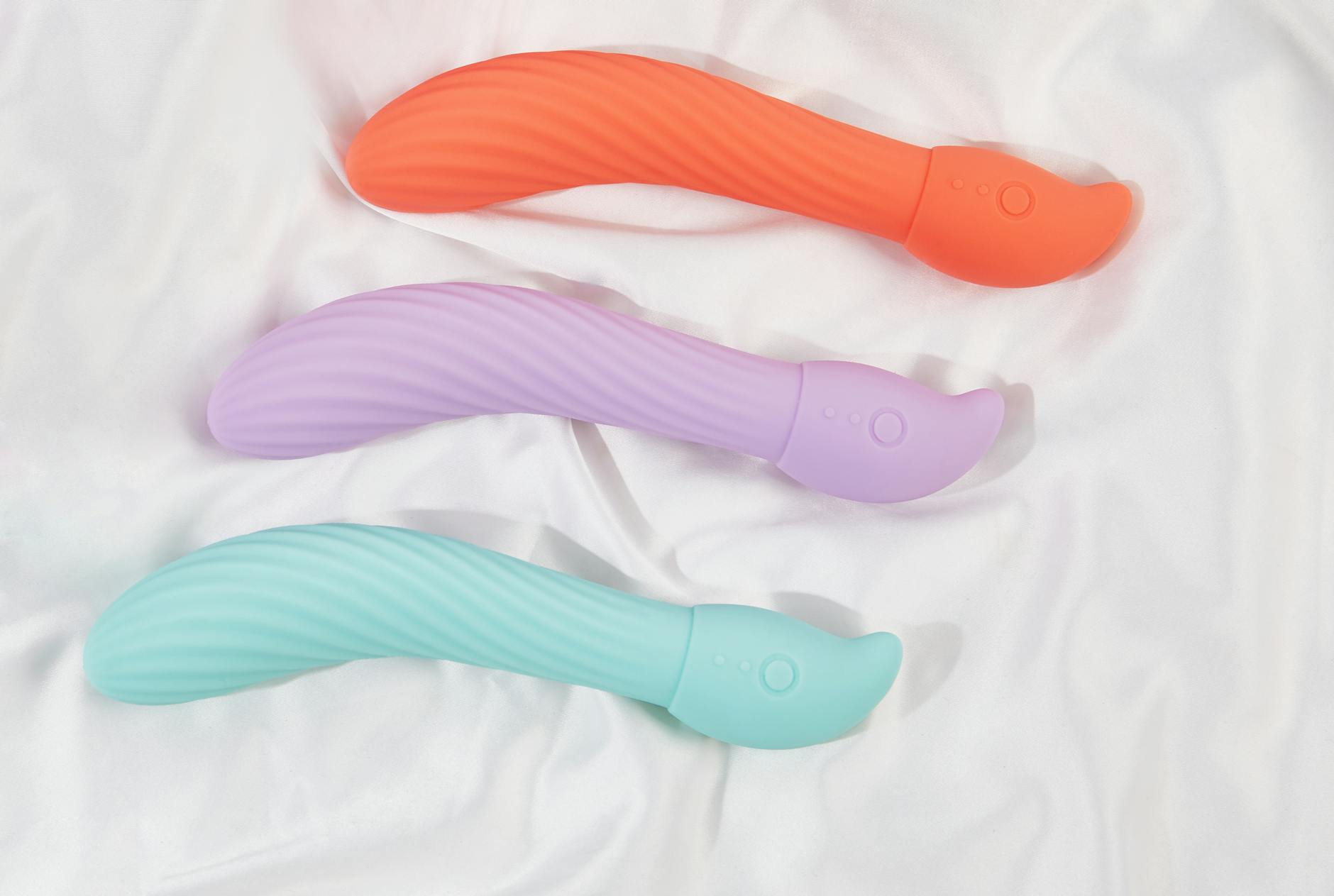
Photo by IFONNX Toys on Pexels
What your orgasm (or non-orgasm) actually tells you
I'm going to say something that feels controversial: the orgasm is not the point.
I know. I'm in the pleasure business and I just said the orgasm isn't the point. But here's the thing: if you make orgasm the goal, you've turned pleasure into performance. And performance kills pleasure.
What actually matters is that your nervous system reaches deep relaxation and your body feels sensation strongly enough to remember it later. That can be orgasm. It can also be profound relaxation. It can be intense sensation that doesn't resolve into climax but feels incredible anyway.
If you're using a lemon vibrator regularly and you're not having orgasms, that's worth examining. Not because you should be, but because it tells you something about what your body needs. Some people don't have reliable orgasms from vibration alone and feel amazing from the sensation anyway. Some people need visualization or fantasy to combine with the physical sensation. Some people need to relax their pelvic floor more. Some people have been told for so long that they "take too long" that their body learned to not respond at all.
If orgasms are important to you and you're not getting them, those are things worth exploring. But the exploration starts by removing the pressure, not adding urgency.
Recovery and what comes after
This is another part people skip. Your nervous system just shifted from sympathetic to parasympathetic and back again. It needs a landing.
Don't immediately jump up and check your phone. Spend five minutes just noticing your body. Heart rate, breathing, any lingering sensation, how your skin feels. Some people feel energized after. Some feel sleepy. Both are fine.
If you felt something that worked, write it down. Not in a performance way. Just "intensity level five, circular motion, took 22 minutes." That becomes your reference library. Your body changes, and what works next month might be slightly different, but having a baseline makes learning faster.
Common friction points
Lubricant matters. Water-based works with all materials and washes off easily. You don't need much. A quarter-sized amount on the vibrator, or on your body, is enough. If you're finding sensation is too intense or uncomfortable, lubrication often fixes it immediately.
Numbness from vibration is real, and it's not permanent. If you're experiencing desensitization, it usually means you're spending too long in one spot or at one intensity level. Move around. Change it up. Your sensation will come back.
Not being able to relax is the biggest barrier. If your pelvic floor stays clenched or your mind won't settle, you're not broken. You might need a longer warm-up. You might need a different environment. You might need to use a vibrator that feels different (something like the Lem's approach to stimulation might work differently than another device). And sometimes you just need to not be in your head about it, which happens with practice.
FAQ
How long should solo sessions actually last?
There's no timer. Anywhere from 10 to 45 minutes is common. More matters less than consistency. Twenty minutes twice a week teaches your body faster than a random 90-minute session once a month. Attention and presence matter way more than duration.
Is there a wrong way to use a lemon vibrator?
The main thing is not to force pressure. Lemon vibrators work best with light to moderate contact, not grinding. If you're pressing it hard and feeling numb, you've already passed the optimal sensation point. Ease off and let the vibration do the work.
Can you use a vibrator too much and lose sensation?
That's complicated. Some studies suggest regular vibrator use doesn't desensitize you if you're varying intensity, pattern, and stimulation type. But if you use the same pattern at the same intensity every single day, yes, you habituate. The solution is variety, not abstinence.
Does using a lemon vibrator affect partnered sex?
Not in a bad way. Actually the opposite. Solo exploration teaches you what works, which you can then bring to partnered situations. But it also means you're less dependent on a partner for pleasure, which paradoxically often improves partnered sex because you're coming to it from a place of fullness, not need. If you're using a vibrator with a partner, communication helps. Check out our guide on how to use lemon vibrators with a partner for more on that.
What if I never have an orgasm with a vibrator?
First, you're not alone. Some bodies don't respond to vibration regardless of the device. Second, that doesn't mean you should stop. The pleasure you feel from the sensation, the relaxation, the nervous system shift, those all matter independently of orgasm. Third, if it bothers you, consider seeing a pelvic floor physical therapist or a sex therapist. Sometimes there are fixable barriers. But pressure rarely helps.
How do I choose between different intensity levels?
Start low, escalate slowly, and notice what your body actually wants. Not what you think you should want. The level that feels best is the right level. Most people find their sweet spot between levels three and five, but bodies vary wildly. Experiment over multiple sessions. You'll find your pattern.
The bigger picture
Solo play with a lemon vibrator isn't something you need to "get good at." It's something you explore, learn about, and let evolve. Your body changes. Your preferences shift. What worked last month might not work this month, and that's perfectly normal.
What matters is showing up to your own pleasure with attention and curiosity instead of performance pressure. That's where the real transformation happens.
If you want more depth on how your nervous system responds to different approaches, or how to work through specific barriers with a partner, reach out to us at Hello Nancy. We're here to help.