
Let's talk about the real worry
Your partner isn't actually afraid of the vibrator. They're afraid of what it means. They think it signals that they're not doing enough, that you need something they can't provide, that introducing a toy is code for "I'm dissatisfied with you." These beliefs run deep. Understanding them is half the battle.
Here's the thing: that fear is understandable. But it's also negotiable. You can reshape the conversation entirely by being clear about what you want and what the toy actually does.
The frame that changes everything
Stop calling it a toy. Start calling it a tool.
A toy suggests novelty or distraction. A tool is something that helps both of you reach a shared goal. "I want us to explore this together because I think it could feel amazing for both of us" is radically different from "I want to use this sometimes." One is collaborative. The other feels like a solo project he's not invited to.
Specificity matters too. Instead of "I've been thinking about getting a vibrator," try "I read that clitoral vibrators work really well for some people during partnered sex, and I'm curious to see if that's true for us. Would you be open to exploring that together?" Notice the difference. You're not introducing a replacement. You're inviting an experiment.
Why he's actually intimidated (and what to say about it)
Most partners who resist vibrators fall into one of three categories:
The "I should be enough" guy. He believes that if you need anything beyond his body or effort, he's failing. This one requires direct reassurance. Tell him: "You are enough. This isn't about replacing you. It's about adding something that could make the experience better for both of us. Lots of people use these during sex with their partners. It's not uncommon." Then mean it when you say it.
The "I don't know how to use it" guy. He's worried he'll do it wrong, hurt you, or look foolish. He needs permission to be a learner. "Hey, we can figure this out together. There's no wrong way. I'll tell you what feels good." Hand him the control. Literally. Let him hold it, explore the settings, feel how it works. Demystifying it removes the fear.
The "This changes what we are" guy. He's worried the relationship is shifting into something more experimental than he signed up for. He needs reassurance about boundaries and intention. "This doesn't mean we're becoming something different. It means we're deepening what we already do. I still want you. I want us. This is just an addition."
The conversation setup
Timing is everything. Don't bring this up during sex or right before it. Don't ambush him with a vibrator already in hand. Pick a neutral moment. Dinner. A walk. Somewhere you're both clothed and calm.
Start with curiosity, not demand. "I've been reading about something I'm curious about, and I wanted to talk to you about it" opens more doors than "I want to buy a vibrator." Give him space to ask questions. Let him sit with it. Don't push for immediate buy-in.
If he pushes back, listen without getting defensive. "I'm not comfortable with that" is not "You're wrong for wanting it." It's just information. Ask why. Is it the toy itself? The idea of things changing? A boundary issue? Insecurity? The reason matters because the response is different for each one.
How to introduce it without making it weird
Once he's agreed to try, remove the performance pressure. Don't make the first time a "big moment." Don't choreograph it. Just mention it casually: "Want to try that thing we talked about?" If he says no that night, that's fine. If he says yes, keep it low-key.
Let him watch you use it first, alone or on yourself during partnered play. Some partners feel less threatened when they see it's just a tool that feels good, not a replacement. Others prefer to use it on you themselves. Follow his lead.
Use it during foreplay, not as a substitute for him. That's key. You're not swapping his hands for the vibrator. You're using it alongside everything else you're already doing. If you're using a clitoral vibrator like the Lem, you can use it while he's inside you, which makes it immediately clear this is additive, not exclusive.
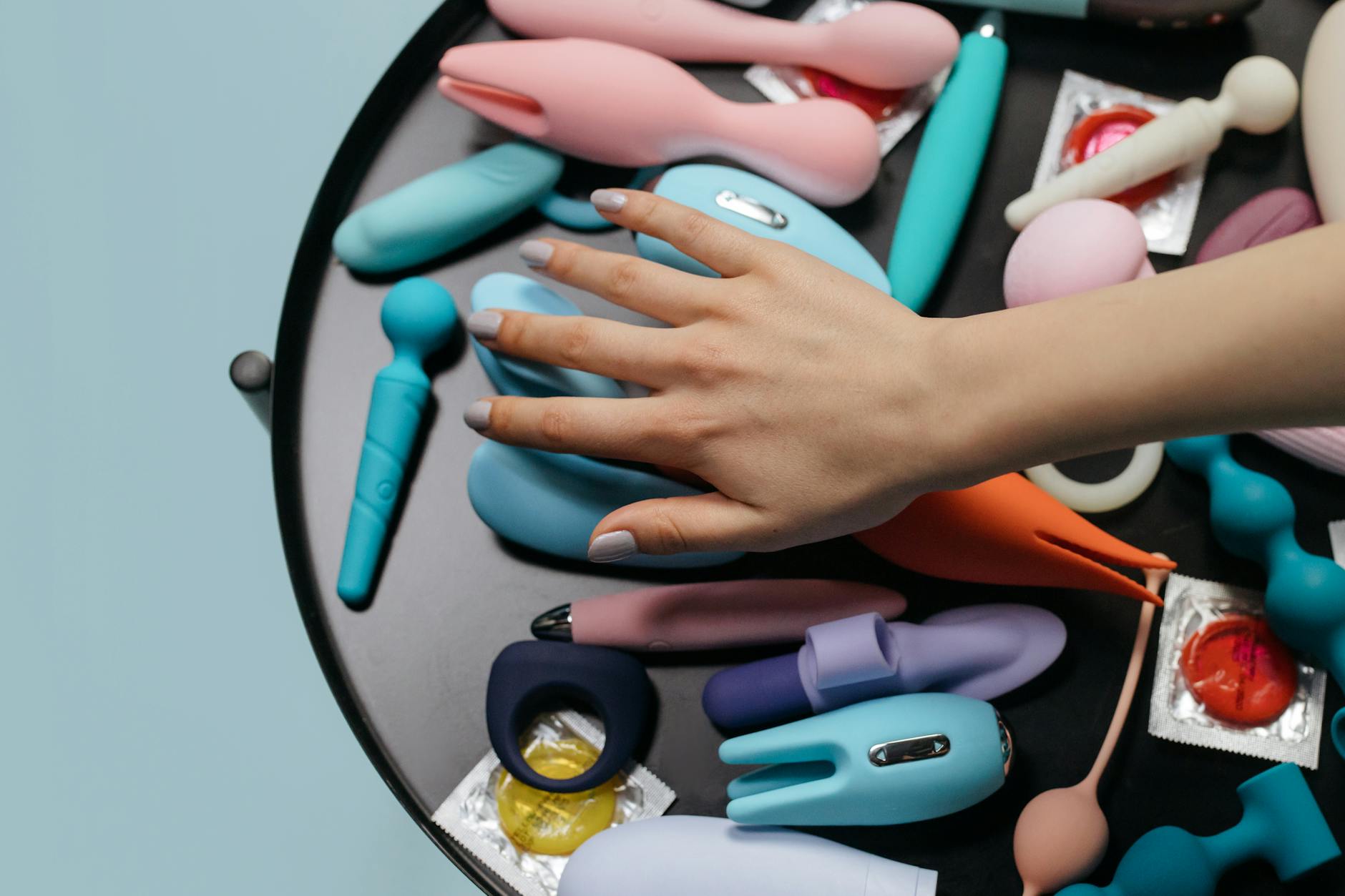
Photo by cottonbro studio on Pexels
What to say when he's uncomfortable mid-session
He might freeze up. He might feel left out. He might worry he's doing something wrong. Any of these is normal.
Stop. Check in. "How are you feeling about this?" If he's uncomfortable, pause. If he's unsure, guide him. "I love when you touch me here. Can you keep doing that while I use this?" Make him an active part of the experience instead of a bystander.
Remember: his comfort matters too. This isn't about forcing him to accept something he's genuinely not ready for. It's about creating the conditions where he can get there. That takes patience.
The ongoing conversation
Don't introduce a vibrator and then never talk about it again. After you use it, reflect. "That felt really good. Did you like it?" "What was that like for you?" These conversations normalize it. They also show him that you care about his experience, not just your own pleasure.
Over time, partners who start resistant often become enthusiastic. They realize the vibrator doesn't compete with them. It enhances everything. They like seeing you come harder. They like not carrying the entire burden of your orgasm on their shoulders.
That's actually the deepest reframe here. A vibrator isn't a threat to his role. It's a relief from an impossible standard. Most partners come around once they understand that.
When resistance is about something else
If your partner continues to resist after you've had an honest conversation, consider whether this is really about the vibrator or about control, trust, or unresolved relationship issues. Those conversations might benefit from a couples therapist or counselor.
Sometimes what looks like "he won't let me use a toy" is actually "we can't talk about what we want without it becoming a fight." The vibrator is just the surface. The real issue is underneath.
But most of the time, with clear communication, honesty about why you want this, and genuine reassurance that his role matters, partners come around. They realize that using lemon clitoral vibrators together isn't a threat. It's an invitation to explore together.
When you're ready to actually try it
If you decide to move forward, start simple. You don't need the most advanced vibrator. You need one that feels good, is easy to control, and looks less intimidating than a wand. Something like the Lem is designed exactly for this: it's straightforward, it works, and it doesn't scream "this is a big deal."
Start on the lowest setting. Let him control it if he wants. Let him watch your face. Let this be about discovery, not performance. The first time doesn't need to be perfect. It just needs to be honest.
Your pleasure matters. His comfort matters. These aren't in conflict. They're both part of a relationship that deepens when you're willing to talk about what you want and invite him to be part of it.
Frequently asked questions
What if my partner says he feels replaced when I use a vibrator?
That's the core fear. Acknowledge it. "I'm not trying to replace you. I'm trying to feel more pleasure with you. There's a difference." Then show him. Use it during penetrative sex. Use it while making eye contact with him. Use it while he's touching you. Make it impossible for him to believe he's being replaced because he's literally involved in the moment.
How do I introduce this if we've never talked about sex openly before?
Start smaller. Ask him what he enjoys. Tell him what you enjoy. Build that vocabulary first. Then introduce the vibrator as a natural extension of that conversation. "You know how I mentioned I enjoy consistent pressure? I read that some people use vibrators for that. What do you think?" Framing it as an answer to something you've already shared feels less out of nowhere.
What if he wants to use it on me but feels awkward about it?
That's actually progress. The awkwardness fades with repetition. Encourage him. Give feedback. "That feels amazing right there." "A little slower." Make him feel like he's skilled, not bumbling. Confidence comes from knowing he's doing something you enjoy.
Should I hide it if he's still not comfortable?
No. Hiding it suggests shame. It also suggests you don't trust him with your own pleasure. If he's not comfortable with you using a vibrator in the relationship, that's a conversation about boundaries and trust that goes deeper than the toy itself. Don't sneak around. Communicate instead.
How long should I wait before bringing this up?
There's no magic timeline. But generally, wait until you've established that you can talk about desire and pleasure without defensiveness. Early in a relationship, when people are still establishing baseline comfort, might not be the moment. But if you've been together for months or years and you're genuinely interested in this, waiting indefinitely sends a message too. You're waiting until you're resentful. That's not fair to either of you.
What if he agrees but then never wants to actually try it?
That's stalling. Check in gently. "I felt like you were open to this. Has something changed?" Listen to what he says. Sometimes men agree to things they're not truly ready for because they think it's what you want. But unresolved hesitation builds resentment on both sides. Better to get it out now.
The bigger picture
Introducing a vibrator isn't really about the toy. It's about whether you can ask for what you want and have your partner hear you without it becoming a referendum on the relationship. It's about whether he can hear "I want more pleasure" as "I want to deepen what we have together" instead of "You're not enough."
Most partners can make that shift. It just requires patience, clarity, and the willingness to have an uncomfortable conversation. The vibrator is just the catalyst.
If you're ready to explore this together, start with conversation, not the tool. Frame it as collaborative. Invite him in. Listen to his fears. Address them directly. Then, when you're both ready, try it. You might be surprised by how much he ends up enjoying it too.
Your pleasure matters. His comfort matters. Both things can be true at the same time.
Sources
Based on relationship communication research from the Gottman Institute and clinical observations in couples therapy regarding desire discrepancies and sexual negotiation in long-term partnerships.