Here's the thing about pleasure and control
Most conversations about sex assume someone else is driving. Your partner sets the pace, picks the toy, decides when to speed up. That works for some people. For others, it's the fastest way to disconnect from what your body actually wants.
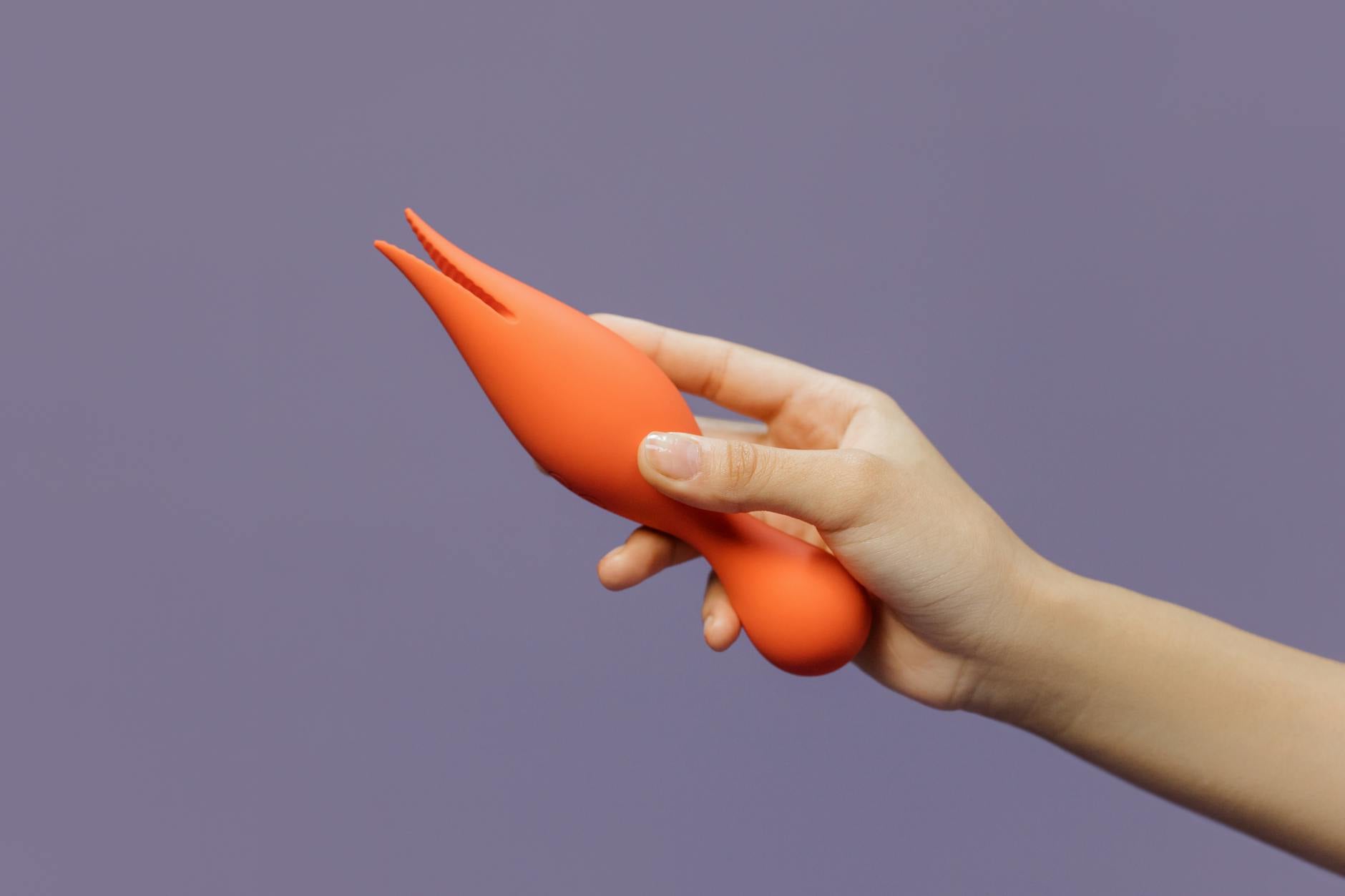
Lemon clitoral vibrators exist partly because control matters. When you hold the device, you're not performing pleasure. You're experiencing it.
Why control changes everything
Neurologically, pleasure needs attention. Your brain has to be present. The moment you're monitoring someone else's rhythm, waiting for them to notice you need more pressure, or adjusting yourself to match their pace, you've split your attention. Half of your nervous system is focused on the other person. That's why partnered sex sometimes feels mechanical even when you love them.
When you control the vibrator, your entire focus narrows to sensation. You're not managing anyone else's experience. You're not negotiating. You're not waiting. This shifts the arousal equation entirely.
There's also a practical element. Clitoral tissue is delicate and varied. What feels incredible at 60 percent intensity might feel too harsh at full power. What works on the tip of your clitoris might be too diffuse on the side. A vibrator you control lets you find those micro-adjustments instantly instead of trying to telepathically guide someone else's hand.
The mental shift that happens first
Here's what I see in my practice: people (especially women) often feel guilty about wanting to direct their own pleasure. There's a phantom narrative that real sex means your partner does the work and you just receive. That's nonsense, but it's powerful nonsense.
Using a lemon vibrator solo or while with a partner requires a small permission slip you have to give yourself first. Your pleasure is not secondary. Directing it is not selfish. Knowing what you want and asking for it is not unfeminine or undesirable.
If you're in a relationship, this actually improves partnered sex. Partners respect clarity. "I want to use my vibrator because I know my body" is infinitely hotter and easier to respect than silent disappointment or faked responses.
Starting solo (the foundation everyone skips)
You can't control something you don't know yet. Before you integrate a lemon vibrator into partnered sex, spend time alone figuring out what "control" even means for your body.
Set aside 30 minutes without interruption. No phone, no second screen. Start with the vibrator off and explore how it feels just as an object. Many people skip this step and jump straight to high intensity. That's backwards.
Turn it on at the lowest setting. Some lemon vibrators have a pattern dial or multiple speeds. Start with pattern one or speed one. Move it slowly across different areas. Your clitoris has internal and external parts. The tip is sensitive. The sides sometimes have a different nerve cluster. The area just above your clitoris might feel better than direct contact.
Notice what happens to your breathing. Does it catch? Does it deepen? These are the signals that tell you where to focus next. Increase intensity only when the current level feels like it's plateauing. You're looking for the sensation that makes you want to stay there, not skip over.
This solo exploration teaches you three things: where you feel most, how to pace intensity, and what "control" means for your unique body. You can't teach that to a partner if you don't know it yourself.
Bringing it into partnered sex without making it awkward
If you share a bed with someone, introducing your own vibrator can feel like you're introducing doubt. You're not. You're introducing information.
The framing matters. "I want to use this because I know how my body responds and I want to feel amazing with you" is very different from "I need this because you're not doing it right." One is additive. One is subtractive. Say the first one.
Start with it during foreplay when your partner is already touching you. They can use hands or mouth on other areas while you control the vibrator on your clitoris. This isn't parallel play. It's collaborative. Your partner gets to see what you prefer in real time. You get to dial in exactly what works.
If you orgasm first, that's not a failure state. Some people need that initial release before they can be fully present for longer partnered sex. Others prefer it as the capstone. Your body's timing is not an inconvenience to be managed. It's information to be respected.
Using lemon vibrators for extended pleasure
Here's something that surprises people: when you control the intensity, you can extend arousal longer.
Most partnered sex has a predictable arc. Arousal builds, climax happens or doesn't, it's over. When you're managing the vibrator, you can modulate that curve. Back off when intensity gets too acute. Build back up. Create waves instead of a single peak.
This is called edging, and it's not some advanced technique reserved for later. It's just using control to explore different plateaus of arousal. Some people have more intense orgasms this way. Others simply enjoy the extended sensation.
The lemon clitoral vibrator's design matters here. Suction-based toys like the lemon create a different sensation than traditional vibration. They simulate oral sex at a level you can control precisely. You can dial between gentle seal and stronger suction. This precision is hard to achieve with fingers or someone else's hand.
When your partner watches
There's something about directing your own pleasure while being watched that rewires the nervous system. You're not performing for approval. You're letting someone witness something real.
If this idea appeals to you, start by being clear about what you want them to do. "I want you to watch and touch me in other places" is different from "I want you to stay still" or "I want you to participate." Clarity is hot. Ambiguity creates self-consciousness.
Your partner might feel like they should be doing more. They might worry they're being replaced. This is where communication before, during, and after matters. "That was so hot to watch you know exactly what you want" afterward reframes the entire experience.

Photo by Enric Cruz López on Pexels
The technical adjustments that support control
If you're new to using a lemon clitoral vibrator, a few practical things smooth the learning curve:
Lubrication matters more than you think. Even if you're already naturally lubricated, adding external lube changes how the vibrator feels. It reduces friction, makes sensations feel broader instead of pinpointed. Try it at different lubrication levels and notice what shifts.
Pressure changes everything. You don't need to press hard. Some people think more pressure equals more sensation. Actually, sometimes backing off slightly changes the frequency distribution and makes it feel stronger. Experiment with light touch versus firm contact.
Angle is its own variable. A lemon vibrator positioned at your clitoris versus slightly above it versus on the side creates three different sensation profiles. Spend time exploring angles when you're solo so you know your preferences.
Intensity escalation should be gradual. Your nerve endings adapt quickly. A jump from level 2 to level 5 can feel overwhelming and actually create numbness. Small increments let sensation build sustainably.
When you understand these variables, you're not just using a toy. You're becoming fluent in your own pleasure.
Building communication around vibrator use
If you're partnered, your vibrator becomes part of the shared language. That sounds clinical. It's actually the opposite.
Talking about it removes shame and mystery. "When I use this, I like you to do X" gives your partner something clear to work with. Most partners actually feel relieved to have direction instead of guessing.
Some couples find that using a lemon vibrator together creates a new conversation about pleasure generally. What are your actual preferences? What do you actually want versus what you think you should want? These are relationship-deepening questions masquerading as sex questions.
If your partner resists your vibrator, that's information too. Sometimes it reflects insecurity. Sometimes it reflects a difference in values or preference around sex. Those things deserve a direct conversation, not silence.
When to seek more specificity
Most lemon vibrators have patterns and intensity levels. If the standard offerings don't hit for you, there's probably a reason worth investigating.
Some people find suction-based devices like the lemon work better than traditional vibrators for clitoral pleasure. Others prefer a different frequency. Some need more surface area. There's no "should" here. Your body's preference is not a flaw. It's a data point.
If you're consistently struggling to reach orgasm even with full control and the right tool, that might point to something else. Stress, medication, hormonal shifts, pelvic floor tension. A therapist or gynecologist can help you separate what's physiological from what's psychological.
Control is powerful. But it's only part of the equation.
FAQ
Is it normal to prefer using a vibrator alone over partnered sex?
Completely. Solo orgasms with a tool you control are often more intense because there's zero performance pressure. That doesn't mean partnered sex is broken. It means your body responded to a specific context. Many people enjoy both differently. Preference for one doesn't cancel out capacity for the other.
What if my partner feels hurt when I use a vibrator with them?
That hurt usually comes from insecurity ("I'm not enough") rather than from the vibrator itself. The reframe that helps: a vibrator isn't replacing them. It's enhancing what's already there. You can use one together and feel more connected, not less. The key is framing it as collaborative, not substitutional.
Can you desensitize yourself by using a lemon vibrator too much?
Not typically, but intensity creep is real. If you only ever use the highest setting, your body adapts and lower settings feel dull. Varying intensity, patterns, and frequency helps maintain sensitivity. Also, taking breaks from vibrators entirely gives your nerve endings a reset.
How do I explain to a new partner that I want to use my vibrator during sex?
Direct and confident: "I know what my body needs. I'd love to use this when we're together." If they need reassurance, add: "This is about me knowing myself better, not about anything you're missing." Most partners appreciate clarity. If someone makes you feel bad for knowing your body, that's a compatibility signal.
What if I can only orgasm with a vibrator now?
That's not a problem unless you experience it as one. Your body has learned what intensity and sensation it needs. That's information, not damage. You can still have partnered sex, feel pleasure, and be present without orgasming. Orgasm isn't the only measure of good sex. That said, if you want to expand your capacity, talking to a therapist who specializes in sexuality can help.
Is using a vibrator solo "real" sex or does partnered sex count more?
Yes, solo sex with a vibrator is real sex. It's you and your pleasure and a tool you chose. The only reason partnered sex feels like it "counts more" is cultural messaging that real sex requires another person. Ignore that. Your orgasm is your orgasm, regardless of who's in the room.
The bigger picture
Lemon clitoral vibrators exist because pleasure shouldn't require negotiation or luck. When you control your own sensation, you learn your body. You learn what you actually want versus what you think you should want. You learn that pleasure is a skill you can develop, not a gift someone gives you.
That knowledge changes how you show up in partnered sex. You're clearer. More present. Less resentful. And paradoxically, most partners find that more desirable than someone who silently hopes they'll figure it out.
Your pleasure is not a request. It's a right. Start acting like it.
Have questions about using lemon vibrators or exploring your own pleasure? Reach out to our team at /contact for personalized guidance.