Let's talk about the thing nobody mentions
You're in the middle of sex. Your partner is there. Your body is responding. And then your brain pivots to your email inbox, the grocery list, or whether you locked the front door. It's not a character flaw. It's not low desire. It's actually one of the most common friction points in intimate life, and it derails pleasure in ways that feel impossible to fix on your own.
The gap between physical sensation and mental presence is where focus breaks down. Your lemon vibrator can't change your work stress, but it can rebuild that bridge.
Why your mind wanders during sex
Three things are happening at the neurological level. First, sustained stimulation without novelty causes mental drift. Your brain habituates. The same gentle pressure, even if it feels good, stops registering as novel input. Second, anxiety about performance triggers a self-monitoring loop where you're watching yourself have sex instead of actually having it. You're narrating instead of experiencing. Third, if foreplay is too slow or doesn't build momentum, your mind fills the gap while your body waits.
This isn't about willpower. It's about stimulus design.
How lemon clitoral vibrators recapture attention
A lemon vibrator works differently than hands or a partner's body alone because it creates unpredictable micro-variations in sensation. The pulsing pattern, the angle shift, the intensity dial. Each element gives your brain a new signal to track. That novelty forces attention.
When you use a lemon sucker on its own, you're building a direct feedback loop. Sensation arrives. Your brain processes it. You adjust. More sensation. Your mind can't wander because you're actively solving for pleasure in real time. This is the opposite of passive receiving, which is where focus typically fails.
The physical specificity matters too. A lemon clitoral vibrator targets a concentrated area. That precision anchors attention. Your mind knows exactly where sensation is happening. Compare that to broad pressure, which diffuses focus across a larger field.
The three-technique framework that works
Start with the lowest pattern. Most people make the mistake of going to pattern 3 or 4 immediately. That creates a plateau fast. Instead, begin at pattern 1 and stay there for a full five minutes. Let your body adjust. Let attention stabilize. This feels boring at first. It's not. You're building a focus foundation.
Add a conscious breathing anchor. Before you touch the lemon vibrator, set a breathing rhythm. In for four counts, hold for two, out for four. Breathe that way throughout. If your mind drifts, the rhythm pulls it back. You're not forcing focus through willpower. You're using physiology to hold attention. Your nervous system stays engaged.
Increase intensity in slow increments. Move from pattern 1 to pattern 2 only when attention is solid. Then stay there. The jump from pattern 2 to pattern 3 should take time. This gradual build keeps your brain tracking pleasure instead of jumping ahead to outcome. Many people rush intensity to compensate for lost focus. That backfires. Slow intensification rewires how your brain processes sensation.

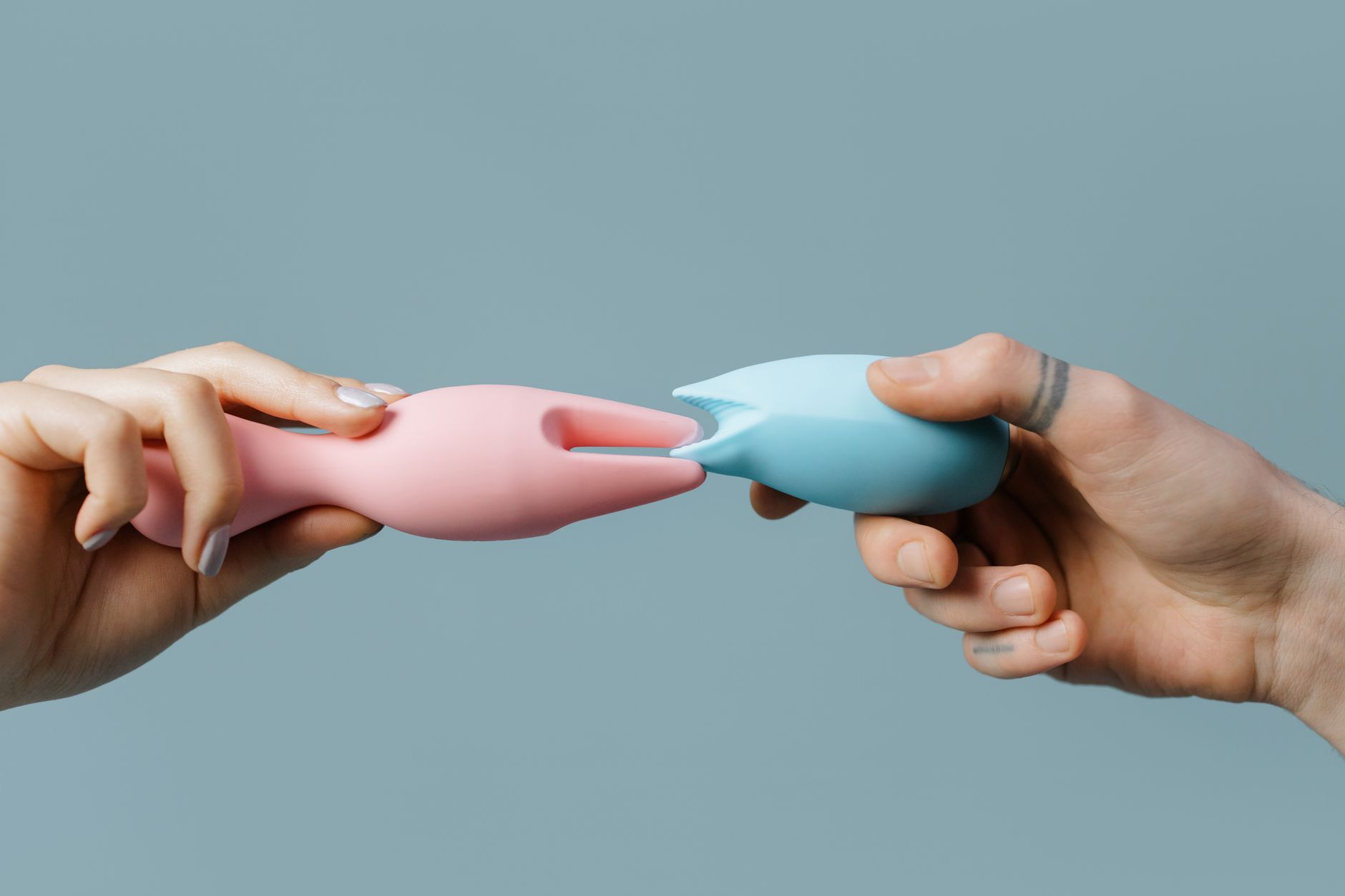
Photo by FounderTips on Pexels
What to do when focus slips mid-session
Your mind wanders. Don't restart. Don't feel defeated. Treat it like a refocus cue. The moment you notice you're thinking about something else, pause the lemon vibrator for three seconds. Breathe once fully. Restart at a lower intensity pattern than where you were. Your brain recognizes the shift as a reset signal. Attention comes back.
If you're with a partner, this is useful information too. Tell them your focus work is ongoing and that pauses aren't failures. They're recalibration moments. Many partners actually find this grounding. It transforms sex from performance to presence. That shift alone changes the dynamic.
When focus feels hardest, sometimes the issue isn't the tool. It's that you need to address what's actually distracting you. If you're ruminating about a conversation or carrying stress, thirty minutes of foreplay won't solve it. Acknowledge it first. A five-minute conversation, a walk, or setting a worry boundary for the next hour can matter more than technique. The lemon vibrator amplifies your presence once you've cleared the obvious static.
Why consistency builds over time
You won't nail perfect focus in session one. This isn't about single-session mastery. It's about training your nervous system to sustain attention during intimacy. Each time you use these techniques, your baseline for focus improves. Your brain learns that this context is for presence, not problem-solving.
The first week, you might hold focus for three minutes before drifting. Week three, it's eight minutes. By week six, most people report that mind-wandering drops significantly. The lemon vibrator becomes a reliable anchor, not a novelty.
Partners notice too. When your attention is genuinely present, the dynamic shifts. You're not going through motions. You're actually there. That presence is magnetic. It often increases desire, which sounds counterintuitive until you realize that real connection requires real attention.
When focus loss signals something else
Sometimes persistent mind-wandering isn't about technique. It's pointing to relationship friction, untreated anxiety, or disconnection from your body. If focus exercises and a lemon clitoral vibrator aren't moving the needle after four weeks of consistent practice, that's worth exploring with a therapist. The tool is powerful, but it's not a substitute for addressing underlying relational or psychological work.
The same applies if focus loss is paired with numbness, pain, or no physical response. Those are different problems requiring different solutions. A lemon vibrator is a focus anchor, not a diagnostic tool. Use it for what it does. Get professional support for what it can't.
Frequently asked questions
Why does my mind wander more with a partner than alone?
Performance anxiety activates a self-monitoring script. You're tracking whether your partner is enjoying themselves, whether you're "doing it right," whether you'll orgasm on time. That internal commentary is incompatible with presence. The solution isn't to hide it. Tell your partner you're working on presence and sometimes need to pause and refocus. That honesty actually deepens intimacy more than pretending you're fully engaged when you're not.
Can I use a lemon sucker with a partner if I lose focus?
Completely. In fact, partner involvement can help. They can hold the lemon vibrator while you focus on breath and sensation. Or you can use it yourself while they're present but not directing the experience. The key is removing the pressure to perform and increasing the permission to be fully in your body.
How long should each practice session be?
Start with ten to fifteen minutes. That's long enough to test the three-technique framework without exhaustion. Many people find that shorter, focused sessions actually build attention faster than long, wandering ones. You're training focus, not duration.
What if nothing brings me back once I'm mentally gone?
Then the issue might be context. If you're tense, rushed, or in a space where interruption is likely, your nervous system won't relax into presence no matter what tool you use. Carve out actual time. Close the door. Give yourself permission to be unavailable. That boundary makes focus possible.
Does this work if I have ADHD or anxiety?
It can. The repetitive, predictable sensation of a lemon vibrator actually helps ADHD brains because the stimulus is precisely targeted. Anxiety might require longer breathing anchors and slower intensity building. If you're managing ADHD or diagnosed anxiety, the principles are the same. You're just adjusting the timeline and giving yourself more room for recalibration.
Can partners help rebuild my focus, or should I practice alone first?
Both have merit. Solo practice builds your baseline. You learn the techniques without navigating another person's presence. Once you're solid alone, partnered practice deepens it. But don't treat solo and partnered as separate worlds. You're building the same neural pathway in both contexts. The lemon clitoral vibrator works either way.
The bottom line
Losing focus during sex isn't a personal failure. It's a signal that your brain needs better anchoring. A lemon vibrator gives you that anchor. The pulsing pattern, the micro-adjustments, the precision of sensation. These rebuild the bridge between your body's responses and your mind's attention. Start low. Breathe consciously. Build slowly. Within weeks, you'll notice that presence comes easier, pleasure feels steadier, and the gap between physical sensation and mental engagement closes. That consistency is real, and it's worth the practice.