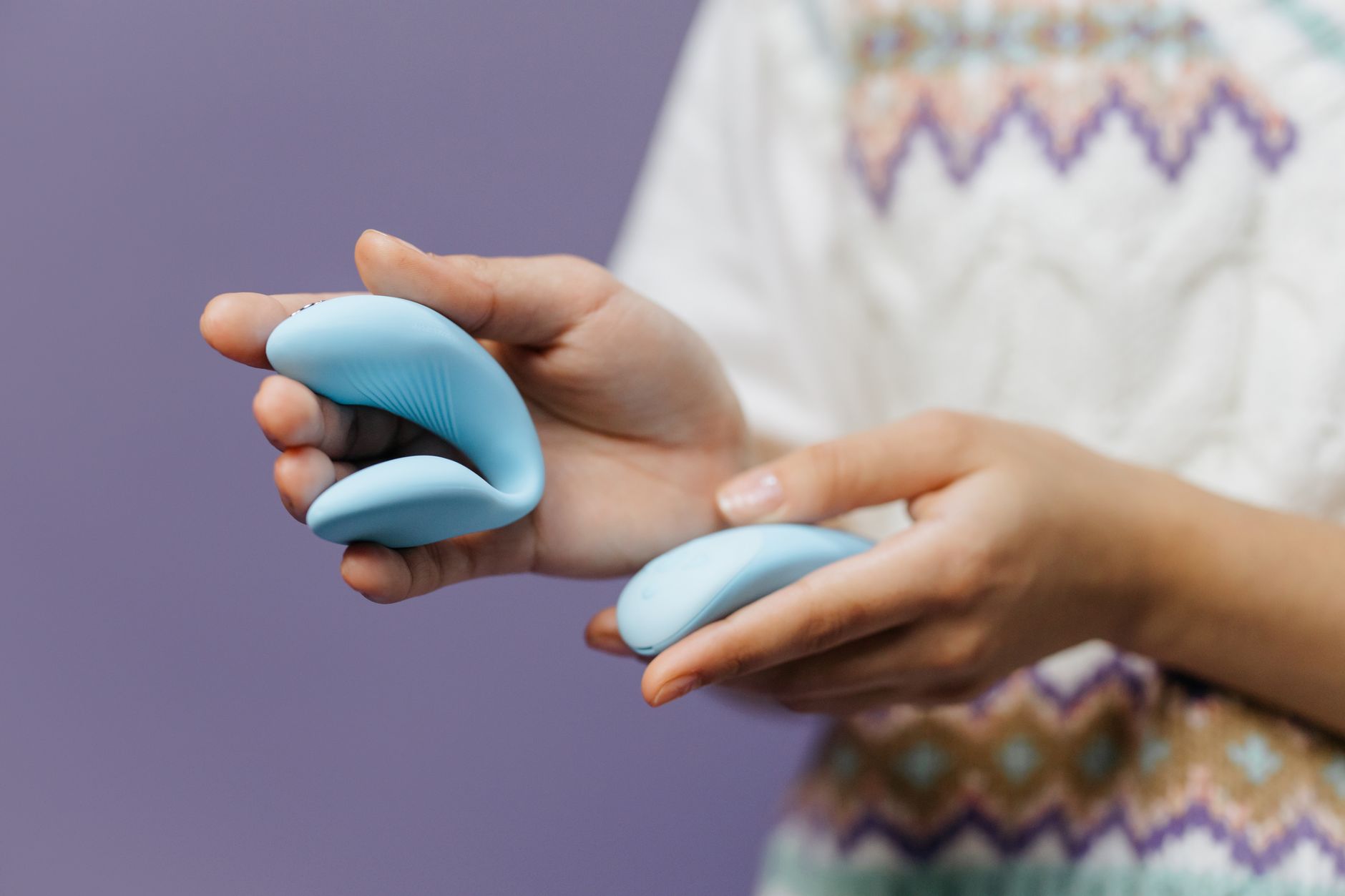
The moment you realize you want to bring this up
You're a few months in. The sex is good, maybe really good. And you're thinking about your Lemon clitoral vibrator sitting in the drawer, wondering if now is the time to mention it. Or maybe you're starting fresh and wondering how early is too early to be honest about what you actually like.
Here's the real thing. Introducing a vibrator into a new relationship is not about fixing anything that's broken. It's about deepening what's already working. The couples who navigate this smoothly aren't the ones who are struggling. They're the ones who can talk about pleasure like it's a normal conversation, the same way you'd discuss dinner plans.
I've worked with hundreds of couples through this exact moment. The anxiety is almost always the same. "What if they take it the wrong way?" "What if they think I'm not satisfied?" "What if it kills the mood?" And then the couples who actually do it find that the opposite happens. The mood gets better. The connection deepens. Because you're not hiding something. You're inviting them in.
Why new relationships are actually the perfect time
You might think the opposite. New relationships feel fragile. You're still figuring each other out. Why introduce complexity?
But here's what's actually true. New relationships are when you set the template for how you communicate about pleasure. If you hide what you want now, you're training the relationship to keep hiding things. You're creating a precedent where your pleasure is something separate from theirs, something you manage alone in the dark.
Conversely, if you can say "This is something I enjoy, and I'd love to explore it together," in month three, you're establishing a pattern of openness that compounds over time. The relationship gets easier to navigate, not harder.
The timing matters, though. Not in the way you think. It's not about how long you've been together. It's about whether you've already had conversations about sex that went okay. If you've joked about sex, asked each other what you like, or even just had a moment where you said something slightly vulnerable and they responded with warmth. Those are your green lights. Once you know your partner can handle vulnerability without shutting down or making it weird, you've got your window.
The conversation before the conversation
Don't ambush them mid-sex. Don't leave it on the nightstand like a surprise. Don't make a big speech.
Instead, create a low-stakes moment. You're getting coffee, sitting on the couch, in the car. Somewhere you're not naked and the stakes feel manageable. The opener matters less than the tone. You're not confessing. You're sharing.
"I've been thinking about something and I want to talk about it because I trust you. I have a clitoral vibrator that I really enjoy using, and I've been wondering if you'd want to explore it together. No pressure at all. Just wanted to put it out there."
That's it. You've said it simply. You've named the object (not "toys" or "something special," just what it is). You've been clear about what you want (to explore it together) and you've removed the pressure (no pressure at all).
Their response tells you a lot. If they say yes immediately, great. If they need time to think about it, that's also fine. If they seem uncomfortable, you can say, "We don't have to use it. I just wanted you to know this is something I'm into."
The goal isn't to force a yes. It's to create enough safety that they can think about it without shame.
What they might be thinking (and how to address it)
Most partners worry about one of three things. Knowing what's actually running through their head helps you address it without becoming a mind reader.
1. "Am I not enough?"
This is the big one. They think a vibrator means you're unsatisfied with them. You can address this directly. "This isn't about you. This is about me knowing what I like and being able to show you." You can even frame it as a gift to them. "I want you to see me when I'm really turned on. This helps me get there."
2. "Will this be weird to use?"
They're imagining awkwardness. The solution is normalizing it. Tell them what you're thinking. "I'm imagining we'd use it while you're touching me, or we could take turns controlling it. We can figure out what feels good."
3. "Is this standard? Am I being asked to do something weird?"
This one's quieter but real. You can ease it by mentioning that plenty of couples use vibrators. It's not kinky. It's not extreme. It's just another tool in the box.
The first time using a Lemon vibrator together
Don't overthink the logistics. The magic is in the simplicity.
Start with plenty of foreplay. Get turned on first. Let your body be ready. Then when things are heating up, bring it out naturally. "I want to try this with you." Show them how it works. Let them hold it. Let them see your face when you use it.
The clitoral vibrators from Lemon Suction are designed to feel intuitive. If you're using something like a Lemon clitoral vibrator, the suction stimulation feels completely different from penetration. It's not a replacement for sex. It's an addition. Some couples find it makes orgasm easier to reach during partnered sex. Others just like the sensation.
Honestly, the first time might be a little awkward. That's completely normal. You're learning together. The second time is almost always better. The third time, you've probably already moved past any weirdness into actual fun.
Managing the emotional logistics
Introducing any new element into sexuality can bring up feelings that surprise you. You might feel more vulnerable. Your partner might feel less needed. You might feel embarrassed after. None of these mean something is wrong.
The couples who integrate this smoothly have one thing in common. They talk about it after, not just during. You don't need a debrief. Just a check-in. "That felt good. Did you like it?" Or even just "Thanks for being open to trying that."
These small moments of acknowledgment cement that you're doing this together. You're not using a vibrator in your relationship. You're building a relationship where pleasure is something you prioritize, explore, and talk about. That matters. Not just for sex. For everything.
When timing is off (and how to know)
If you've been together less than two months and things still feel a little uncertain, it's worth waiting. Not because there's anything wrong with you. Just because you want to introduce this when the foundation is solid enough to support it.
If you're in a relationship where sex is already tense or infrequent, bringing in a vibrator won't fix that. That's actually the moment to talk to someone like me. Usually the vibrator becomes a scapegoat for deeper issues. Better to untangle those first.
If your partner has previously expressed discomfort with toys, you still can. But approach it differently. "I know you weren't sure about this before, and I get it. I'm not trying to change your mind. I just wanted to let you know this is important to me, and if you ever want to learn more or try it, I'm here."
You can't force openness. But you can stay open. And often, that's what shifts things.
The practical setup
Cleanliness matters more when you're sharing. Make sure your vibrator is clean before and after. Most lemon sexual toys are easy to clean with warm water and a little toy cleaner. Do this as a matter of course, not as a big deal.
Talk about boundaries around pressure. Can they control the intensity? Are there positions that work better? The Lemon suction vibrators work well during different types of sex because the sensation is focused and specific. You can use it during penetration, or on its own. Figure out what you both like.
Keep it accessible but private. Not hidden like shame, just stored somewhere you both know about. This normalizes it as part of your sex life, not a secret.
The long game
Once you've opened this door, you've changed the relationship in a really good way. You've said that your pleasure matters. You've shown that communication about sex doesn't have to be scary. You've created a template where trying new things together is normal.
Some couples use vibrators regularly. Some use them occasionally. Some use them together for a while and then go back to not using them. All of that is fine. The point isn't the vibrator. The point is that you're talking. You're exploring. You're willing to be known.
That's what actually deepens intimacy in a new relationship. Not the sex itself. The honesty underneath it.
People also ask
How do I bring up using vibrators if my partner has never mentioned anything like this?
You bring it up the same way. A vibrator isn't a weird confession. It's something you enjoy. You can frame it simply: "I want to share something with you that's important to me." You don't need them to have mentioned it first. You're not waiting for permission to have preferences.
What if my partner says no?
If they say no to exploring it together, that's information. You can respect that boundary and still use your vibrator alone. If it becomes a bigger issue (they tell you that you can't use it at all, or that wanting to use it means something is wrong with you), that's a yellow flag about how they handle your autonomy. Worth paying attention to.
Will using a vibrator make it harder to orgasm without one?
Not with a partner. The clitoral stimulation from a vibrator is different from partnered sex. Your body doesn't stop being able to respond to one thing just because you tried another. This is one of the most common fears and it's not how bodies work. You can use a Lemon vibrator with a partner and still have completely satisfying sex without one.
How do I use a Lemon clitoral vibrator during sex?
If you're having penetrative sex, you can use it while your partner is inside you. The suction sensation is separate from penetration, so they work together. If you're having non-penetrative sex, you can use it however feels good. There's no one right way. You figure it out together.
What if it's awkward the first time?
It probably will be a little awkward. That's completely normal. New things are awkward. That doesn't mean you shouldn't do them. The second time is usually significantly better because you're past the nervousness. Give it two or three tries before deciding it's not working.
Is it weird to ask a partner to control the vibrator?
Not at all. Some people love it. It gives them a way to participate in your pleasure more directly. Some couples find that this makes sex feel more collaborative. Others prefer to use it solo while their partner does something else. There's no normal. There's just what works for you two.
The real takeaway
Bringing a vibrator into a new relationship is actually a sign that things are going well enough to be honest. It means you trust them. It means you're willing to be known. And when they respond with openness, it means they trust you back.
That foundation matters way more than the vibrator itself. If you want help navigating relationship communication around pleasure or intimacy, I'm here. Reach out at /contact, and let's talk through what you're navigating.