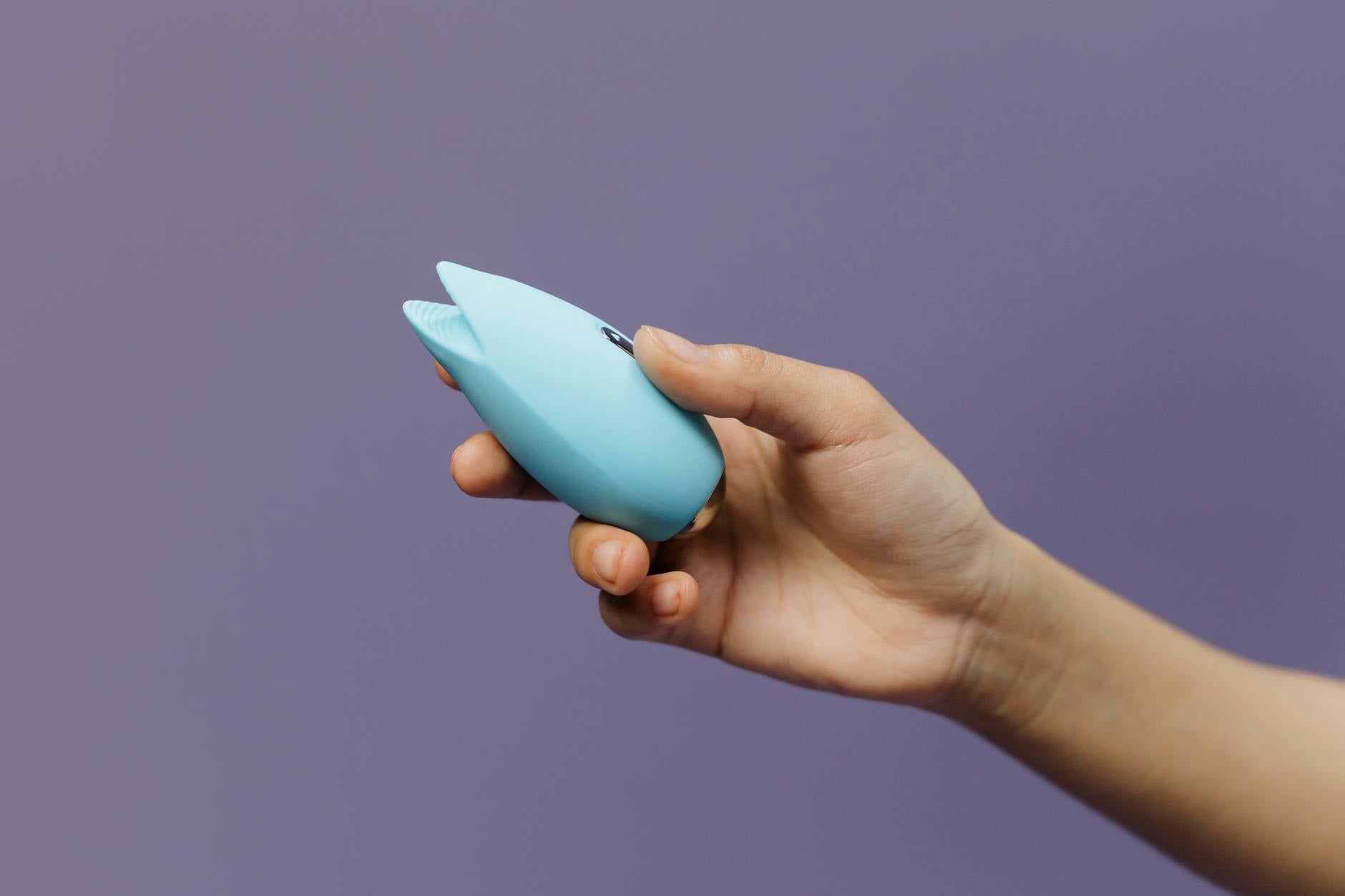
How to Use Lemon Vibrators When Desire Has Faded in a Long-Term Relationship
Here's what nobody wants to admit: after five years, ten years, or twenty years together, desire flattens. Not always. Not for everyone. But often enough that it's the number-one reason couples stop having sex, and it happens so gradually that by the time you notice, it feels permanent.
The good news is that it's not. And lemon vibrators, specifically, work differently than traditional toys for couples trying to rebuild that spark. This is the difference between adding a vibrator to your existing dynamic and actually using it to change the dynamic itself.
Why desire fades (and why it's not about love)
Let me separate two things that get tangled together constantly. You can be deeply in love with your partner and have zero interest in sex with them. These are not mutually exclusive. What you're experiencing is not a failure of the relationship. It's a physical and psychological shift that happens in long-term partnerships.
The reasons are varied. Stress, kids, work, mismatched libidos, medication, hormones, grief, or just the sheer repetition of being known by one person for years. The novelty is gone. The anxiety that powered arousal in the beginning is gone too. Your nervous system has settled into safety, which is beautiful for bonding but not always for desire.
Here's the part most couples miss: introducing a vibrator to a dead bedroom without first rebuilding the conversation around pleasure rarely works. You're not adding spice to food that still tastes good. You're trying to fix something that feels broken, and a vibrator can't fix a broken framework. It needs a different approach.
The framework: what actually needs to happen first
Before you buy a lemon vibrator, before you even mention toys, you need to separate three conversations that are currently stacked on top of each other like a Jenga tower about to collapse.
Conversation One: The desire itself. Not sex, not performance. Just desire. Have you felt it toward anyone or anything lately? Is this about your partner specifically, or is your libido in general lower? Has a life change (job stress, health shift, medication change) affected your baseline arousal? This conversation isn't about fixing anything. It's about understanding what's actually happening.
Conversation Two: The safety and resentment. Long-term couples accumulate micro-grievances. Someone always initiates. Someone always says no. Someone feels rejected. Someone feels pressured. These pile up invisibly until sex feels like negotiation instead of connection. You can't bypass this. You have to name it. "I feel like I'm always the one asking," or "I worry you're only doing this because I asked." These are hard conversations. They take time. They're also non-negotiable.
Conversation Three: Pleasure as something separate from sex. This is where lemon clitoral vibrators enter the picture. And it starts not with penetration or partnered sex, but with solo exploration.
Why lemon vibrators change the game for couples with faded desire
Traditional vibrators feel clinical. Buzz, intensity levels, batteries dying, cord anxiety. They're tools that demand attention. Lemon suction vibrators work differently. They use gentle suction rather than vibration, which feels less intrusive and more like pleasure building gradually rather than being imposed.
Here's why this matters for couples who've lost desire. A lemon vibrator creates permission for pleasure that isn't about performance or reaching a goal. The sensation is localized and slow to build. It doesn't demand rapid escalation. For someone whose body has been running on low arousal for years, this gentle ramp is often more successful than anything more intense.
Beyond the physical mechanics, introducing a lemon clitoral vibrator into a stalled relationship does something psychological. It says, "Your pleasure matters enough that we're investing in it." Not in a transactional way. In a way that feels like care.
Step one: solo exploration (the often-skipped part)
If you've both agreed to try this, the person with a vulva should spend at least one to two weeks exploring the lemon vibrator alone. This is not foreplay. This is research. You're learning how your body responds, what patterns feel good, what doesn't, and you're rebuilding a relationship with your own pleasure that might have gone dormant.
Start with the lowest setting. The lem vibrator has different patterns, and the suction mechanism means you don't need high intensity. Many people find that the gentler patterns create a more sustainable arousal than the highest settings. Let yourself be surprised by what feels good. You might find that you prefer a specific pattern, or that a certain timing in your cycle makes everything feel different. This information is gold when you eventually involve your partner.
Use lube even if you don't think you need it. Water-based lube makes everything gentler and more sustainable. It's not about dysfunction. It's about pleasure optimization.
Step two: sharing the experience without pressure
After you've spent time with the lemon vibrator solo, tell your partner what you learned. Not a performance, not an invitation yet. Just information. "I found that I respond really well to the second pattern," or "I didn't expect to enjoy the sensation this much." You're normalizing pleasure in conversation, which most long-term couples have stopped doing entirely.
Then, if you both want to, you can invite your partner to be in the room while you use it. This is not about them doing anything. They're just present. They can watch or they can be nearby doing something else. The point is that pleasure becomes something that's not hidden, not shameful, and not performed exclusively for them.
Step three: partnered exploration (slow)
When you move to partnered use, resist the urge to make it immediately sexual. Instead, try using the lemon vibrator as part of extended foreplay, but with a twist: there's no expectation of where it leads.
Your partner can hold the vibrator. They can experiment with patterns while you give feedback. They can take their time. The lem vibrator's design means that neither of you is in a rush. There's no performance pressure because the tool itself encourages a slower pace.
Many couples find that this reintroduces touch and attention that's been missing. Your partner is focused on your pleasure, not on their own performance. You're giving feedback, which means you're communicating about your body again. These are skills that atrophy when desire fades. This rebuilds them.
The conversation that changes everything
Here's the thing that therapists know but couples don't talk about enough. The introduction of a lemon sexual toy into a long-term relationship only works if both people actually want their partner to have pleasure. Not in theory. In practice.
If one person is using a lemon vibrator begrudgingly because the other one wanted to, it will feel weird. If both people are doing it because the relationship matters enough to try rebuilding intimacy, the entire energy changes. The tool is the same. The meaning is completely different.
So before you actually use the vibrator together, talk about what it means to you both. "I want us to reconnect," or "I want you to feel good in your body," or "I miss feeling close to you." These sound cheesy until you're actually saying them out loud to someone you love and who's been feeling distant. Then they're the most important words you can say.
Common complications and how to handle them
Sometimes one partner feels threatened by the introduction of a lemon clitoral vibrator. This is almost never about the toy. It's about feeling replaced, or fear that their pleasure isn't enough, or shame about sex in general. If this comes up, pause. You can't push through it. Instead, you need to hear what's underneath.
"I'm worried that if you have this, you won't want me anymore," is a real fear that deserves a real conversation, not a debate about the vibrator. Reassurance helps, but action helps more. Continue to prioritize partnered sex alongside solo or partnered toy use. Make sure that the person without a vulva is still experiencing pleasure and attention.
Sometimes desire doesn't return even after you've tried this. If that's the case, you've still gained something important. You've proven to each other that you're willing to try. You've created a framework for talking about pleasure. You've rebuilt some physical connection. That's not nothing. It's often the beginning of something better, even if it's not immediately what you expected.
FAQ: Long-term relationships and lemon vibrators
Can a lemon vibrator actually help rebuild desire in a marriage that's been sexless for years?
It depends on whether the sexlessness has an emotional root or a physical one. If the issue is resentment, communication breakdown, or emotional distance, a toy alone won't fix it. But if you're willing to do the harder work of reconnecting emotionally, a lemon vibrator can help you rebuild the physical dimension alongside that emotional work. The key is that the toy becomes a tool for a larger conversation, not a replacement for one.
Is it normal for one partner to be more enthusiastic about trying a lemon vibrator than the other?
Completely normal. Usually the person with lower desire is less interested, which makes sense. But sometimes it's the reverse. The person whose desire hasn't faded wants to try something new, and the other person feels anxious. The solution is never to push. Instead, ask what the resistance is about. Shame? Fear of change? Worry about performance? Once you know, you can address the real issue instead of just the toy.
How long does it take for desire to come back after introducing a lemon clitoral vibrator?
There's no timeline. Some couples notice a shift within a few weeks. For others, it's months of gentle rebuilding. What matters is consistency and honesty about what you're both experiencing. If nothing is shifting after three months of regular, intentional exploration, that's information too. It might mean there's a deeper issue that needs professional support.
Can we use lemon vibrators if we have mismatched libidos and one partner's desire is much lower?
Yes, and actually this is one of the best use cases. A lemon suction vibrator creates arousal without requiring your lower-desire partner to already be aroused, which is often what's missing. It can help them ramp up without feeling pressured. Just make sure that using the vibrator never becomes a demand or an expectation. It's always an invitation.
Is using a lemon vibrator together considered "cheating" or does it change the relationship?
Not unless you've explicitly agreed that it would. For most couples, introducing toys together is actually a form of deepening intimacy because it requires communication and vulnerability. It changes the relationship, yes, but usually in the direction of more honesty and more pleasure. Just make sure both people have genuinely consented and aren't doing it out of obligation.
What if we try a lemon vibrator and it feels awkward or doesn't work?
Then you've gained useful information. Awkwardness is usually a sign that you need to talk more before trying again, or that the emotional groundwork isn't fully in place. Discomfort is data. The best couples who rebuild desire aren't the ones for whom it's easy. They're the ones who are willing to feel awkward together and keep showing up anyway.
The real work starts after the vibrator
Using a lemon vibrator together doesn't fix a broken relationship, but it can be part of rebuilding one. The real work is showing up consistently, having honest conversations about what you both want, and choosing each other's pleasure as something worth prioritizing.
Desire doesn't return because of a tool. It returns because both people commit to the messy, vulnerable work of staying curious about each other. A lemon clitoral vibrator just makes that work a little more pleasurable.
If you're struggling with desire loss in your relationship and you're not sure where to start, consider reaching out for support. Whether that's a conversation with your partner, a therapist who specializes in couples, or just giving yourself permission to explore pleasure on your own terms. You deserve that. Both of you do.
Ready to explore? Learn more about how lemon vibrators work differently for couples and get started with intention and care.