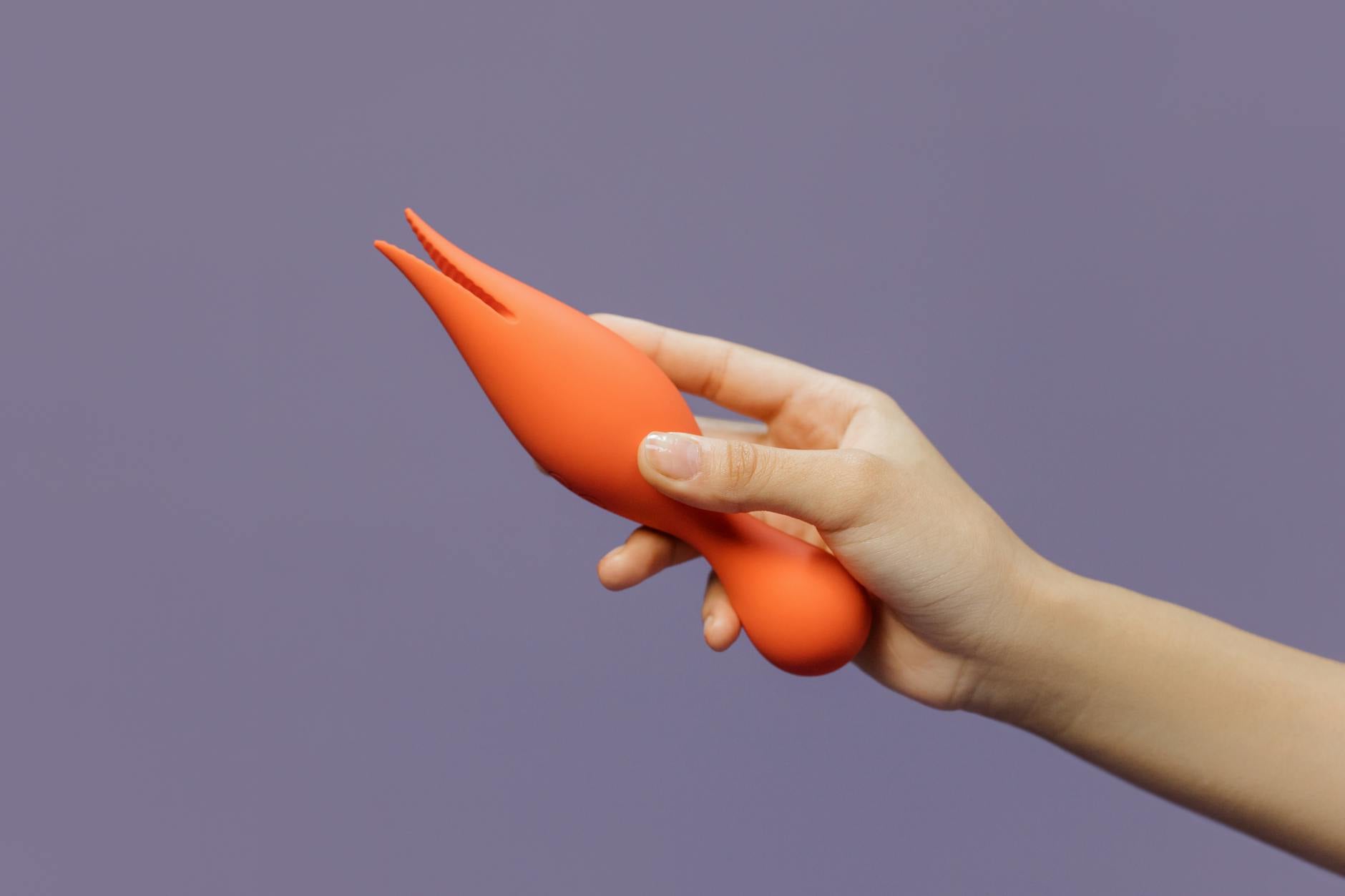
How to Use Lemon Vibrators With a Partner: A Communication Guide
Let's be real. Bringing a lemon clitoral vibrator into your partnered sex life sounds simple in theory. You buy it, you use it together, everyone has a better time. But that's not how it lands for most people. The actual conversation feels loaded. Introducing a toy feels like saying "what we're doing isn't enough," which is not what you mean at all. And then there's the logistics of it. When do you actually bring it in? Who holds it? Does your partner feel sidelined?
I've worked with couples on this exact friction for years. The good news: none of that awkwardness is inevitable. It's solvable with one thing. Information. Honesty. The right framing.
Here's what I know works.
The conversation you need to have first
Don't spring a lemon vibrator on your partner mid-sex. I've seen that backfire in ways that took months to undo. Instead, bring it up the way you'd bring up any other change to your shared life. Not in the bedroom. Not when you're both already aroused. Sometime neutral. Maybe over dinner. Maybe before bed on a random Tuesday.
Here's the frame that actually lands: "I've been thinking about trying a vibrator during sex with you. Not instead of you. With you. I think it could feel really good, and I want us to explore that together."
That sentence does three things at once. It signals that this is about the two of you, not a replacement for him or her or them. It's honest about your motivation without being defensive. And it explicitly invites their participation.
If your partner pushes back, listen to what the actual worry is. Sometimes it's insecurity. Sometimes it's practical anxiety. Sometimes it's just unfamiliarity. Those are three different conversations.
Insecurity sounds like: "Does this mean I'm not enough?" The answer is no, and here's why. Clitoral stimulation during partnered sex is genuinely harder to achieve through penetration alone for most people. A lemon vibrator, or any clitoral vibrator, just removes friction from the equation. You're not replacing them. You're both getting what you actually want.
Practical worry sounds like: "Will it get in the way? Is it awkward physically?" Totally fair. That's when you talk about positions, logistics, who holds it, whether you want to practice beforehand.
Unfamiliarity is the easiest one. They've just never thought about it. Show them some resources. Tell them what you're thinking. Usually, curiosity follows.
Why partners often want this more than you think
Here's something I notice in my practice that surprises people: when you're honest about this desire, most partners are actually relieved. Many have been wondering the same thing. Some have worried that they weren't giving you what you needed. A lemon vibrator becomes permission for both of you to stop pretending that one kind of stimulation is supposed to do everything.
Partners often appreciate vibrators for another reason nobody talks about. They can feel good for their own arousal too. Watching you respond to something that feels incredible is genuinely hot. The pressure to be your only source of pleasure lifts. That's freeing for everyone.
When and how to actually use one together
Timing matters. Don't introduce a vibrator when you're both already stressed or running on fumes. Pick a time when you can actually be present. Maybe a weekend morning. Maybe when you have space to slow down.
Start with foreplay. Let a lemon clitoral vibrator be part of the buildup, not the finale. It's easier to transition to partnered stimulation if you've already had some solo time with it. That way, your body already knows what to expect.
The positioning question is practical but worth thinking through. Most people find that their partner holding the vibrator during penetration works well. It lets them control the sensation and angle while staying close. Some couples prefer that the receiving partner holds it. The point is you get to decide. There's no one right way.
Start with lower settings. A lemon vibrator like the Lem works on multiple patterns, so begin with something gentle and build from there. You can always turn it up. You can't unlearn a sensation that felt too intense too fast.
Managing the emotional side of this
Sometimes, even with a good conversation beforehand, things feel weird in the moment. Your partner might feel awkward holding it. You might feel self-conscious. That's normal. That doesn't mean it's not worth doing.
What helps: talk during. Not in a clinical way. Just check in. "Does this feel good?" "Should we try a different position?" "Do you like this speed?" That transforms a potentially weird moment into collaboration. You're not two people doing something separate. You're figuring something out together.
If it doesn't feel good the first time, that's information. You might need more lubrication. A different angle. A different pattern on the vibrator. Or sometimes you just need to try again when you're both more relaxed. First attempts at anything new are rarely perfect. That's fine.
The practical stuff
Clean your lemon vibrator before and after use. Water-based lube works best with silicone toys. If you're using it during partnered sex, communicate about what you need. Some people like steady sensation. Some like rhythm changes. Some want the vibrator only during certain phases.
Also worth knowing: if penetration is part of your sex life, the combination of penetration plus clitoral vibration can feel intense for some people. That intensity is often a good thing, but it's worth being prepared for it. Go slow your first time. Your body will adjust.
Storage is simple. Keep your lemon vibrator in a cool, dry place. A dedicated pouch or drawer is ideal. And batteries (if applicable) matter. Few things kill the mood faster than discovering you're out of charge mid-session.
When things shift in your relationship
Using toys together can actually be a conversation starter about other things too. What you like. What's changed. What you want to explore next. A lemon vibrator is partly about physical pleasure, but it's also permission to renegotiate what sex looks like for both of you.
If your relationship is already struggling, introducing a vibrator won't fix it. But if you're generally connected and just looking to deepen things, this can be the beginning of a really good conversation. That matters.
FAQ
Can my partner be jealous of a vibrator?
Yes, and that's not irrational. Jealousy is usually about something deeper than the object itself. It's often about feeling needed, or fear of replacement. That's why the conversation matters so much. If your partner understands that a vibrator is about amplifying pleasure together, not replacing them, jealousy usually softens. And if it doesn't, that's worth exploring with a therapist or relationship coach.
Is it weird to use a vibrator during partnered sex?
Not at all. Millions of people do this regularly. It's become pretty standard in relationships where people prioritize mutual pleasure. If it feels weird, that's usually just unfamiliarity, not anything actually wrong. Most couples report that any weirdness disappears after the first or second time.
Should I use a lemon clitoral vibrator or something else?
Lemon vibrators, especially suction-style ones like the Lem, are designed specifically for clitoral pleasure. They work differently than traditional vibrators because they use gentle suction rather than direct vibration. That gentleness makes them popular for partnered use. But the right toy is whatever feels good to you. It's worth trying different types to see what resonates.
What if I want to use a vibrator but my partner refuses?
That's a conversation worth having with more depth. What's the actual objection? Sometimes it's about insecurity, sometimes religious or cultural background, sometimes just unfamiliarity. A relationship coach or therapist can help you navigate this if it matters to you and you're hitting a wall. Your pleasure matters, and so does your partner's comfort. Both can be true.
How do I introduce the idea without making my partner feel bad?
Frame it as collaborative exploration, not criticism. "I've been curious about this and I think it could feel amazing for us" lands differently than "I need this because what we're doing isn't working." Also, sometimes the written word helps. Sending an article or a text is less confrontational than a face-to-face conversation where your partner might feel put on the spot.
Can we use a lemon vibrator if we're not having penetrative sex?
Absolutely. A clitoral vibrator works beautifully in any kind of partnered sex. You might use it during manual stimulation, oral sex, or just on its own. The point is pleasure, and pleasure comes in lots of forms. A lemon sucker-style vibrator is designed specifically for clitoral stimulation, so it works well in any context where that's the focus.
The actual point
Bringing a lemon vibrator into your partnered sex life isn't about fixing something broken. It's about deciding that your pleasure matters enough to be intentional about. That your partner's pleasure matters too. And that exploring together, with honesty and a little planning, makes everything better.
The conversation feels like it might be awkward. But the sex that follows usually isn't. That's worth it.
If you're navigating relationship changes or need support talking through this with your partner, reach out to work with a coach.
Sources & Further Reading
The information in this article draws on clinical experience with couples therapy and relationship dynamics research. For additional reading on communication in intimate relationships, the Gottman Institute publishes extensively on partnership dynamics and sexual satisfaction. For questions about toy safety and use, Hello Nancy's care and safety guides provide detailed product information.