
Why Lemon Vibrators Feel Better When You're Nervous About Using Toys With Your Partner
Let's be real: the idea of introducing a vibrator into bed with your partner can feel loaded. Will they think you're unhappy? Does it mean they're not enough? Are you admitting something that changes how they see you? These questions sit underneath the nervousness, and they're worth naming before you even touch a toy.
Here's what I see in my practice. The anxiety isn't really about the vibrator. It's about vulnerability. You're saying "here's something that feels good to me," and that requires trust. The right tool makes that conversation easier. The Lem, with its compact design and couple-friendly profile, is built for exactly this moment.
I'll walk you through the emotional landscape of introducing a clitoral vibrator to partnered sex, the practical reasons why lemon vibrators work so well for couples navigating this, and what actually happens when you move past the initial nervousness.
The real anxiety is about visibility
Most people don't fear the vibrator itself. They fear the meaning. If your partner finishes before you do, a vibrator feels like proof of that gap. If desire has been mismatched for years, a vibrator feels like an accusation. If sex has been predictable or routine, introducing a toy feels like saying "I've been faking it."
None of that is true. But the feeling is real, and it matters.
What I tell my clients is this: a vibrator is not a commentary on your partner's performance. It's a tool for your nervous system. Your body doesn't care about the narrative you're carrying. It responds to sensation. A lemon clitoral vibrator simply delivers that sensation more efficiently than a hand or fingers can. That's physics, not judgment.
The Lem's design sidesteps some of this narrative anxiety because it's not a wand vibrator that looks like a replacement for a partner. It's compact, it sits at an angle that works for partnered sex, and it's designed so your partner can hold it or you can. That shared control changes the emotional temperature of the conversation. It stops feeling like something you need despite them, and starts feeling like something you're doing together.
Why couples hesitate, and what actually helps
Three barriers show up again and again:
1. Fear of judgment. You worry your partner will think less of you for needing or wanting a vibrator. The antidote is specificity. Don't say "I want to try toys." Say "I want to explore what feels good during partnered sex, and I think a vibrator would help me get there faster. I want us both to have more pleasure, not less." That reframes it from "I'm broken" to "I'm invested."
2. Fear of rejection. You imagine your partner feeling threatened, replaced, or inadequate. This one is worth sitting with together. A conversation that goes "I love sex with you, and I've noticed I come faster when there's external clitoral stimulation, so I want to try bringing that into our time together" is fundamentally different from introducing a vibrator in the dark as a surprise. The first one is a proposal. The second is an ambush.
3. Fear of awkwardness. You worry the logistics will be weird, that it will interrupt flow, that you'll feel self-conscious using it in front of them. This is the most legitimate one, because yes, the first time is usually a little awkward. The Lem's design helps here too. It's quiet, it's sized so it doesn't take up the whole bed, and it works from multiple angles. You're not suddenly managing a wand that's three times the size. You're holding something compact and intuitive.
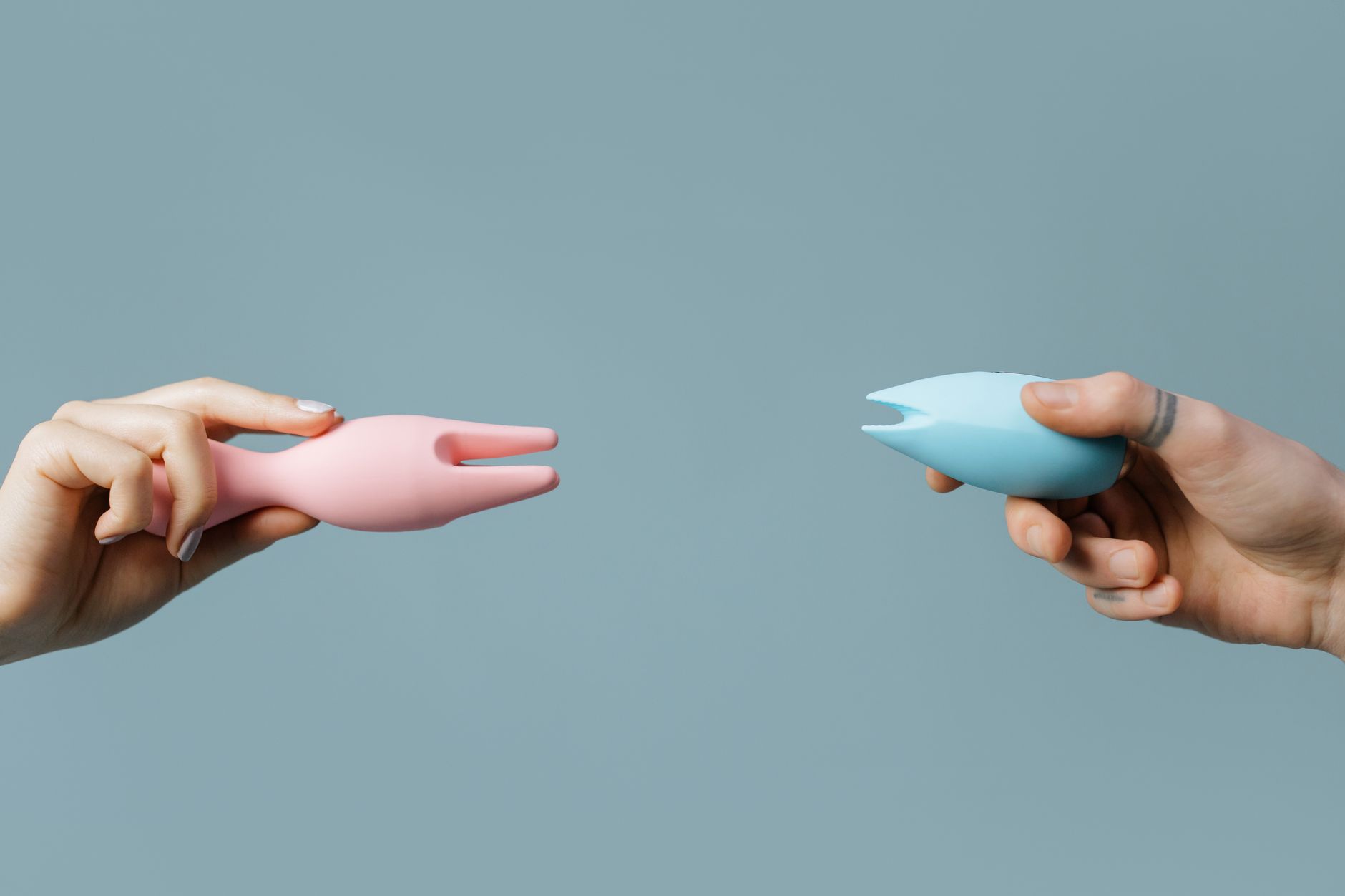
Photo by cottonbro studio on Pexels
How the conversation actually goes
Here's what works. Pick a time when you're not in bed. You're having coffee, or you're in the car, somewhere neutral. Say something like this:
"I've been thinking about our sex life, and I really value it. I also know that I have a harder time coming than you do, and I don't think that's a problem with us. I think it's just how my body works. I want to try something that might help, and I'd love your thoughts. I'm thinking about getting a vibrator and using it during sex with you."
Then stop. Let them respond. They might say yes. They might say "I want to talk about this more." They might feel a little threatened, which is normal. If they do, you can say: "I'm not asking you to do anything different. I'm asking to add something that helps me feel more pleasure. More pleasure for me usually means better sex for us."
That's it. You've named it. You've explained it. You've invited them in.
Now here's the thing. Lemon clitoral vibrators, especially the Lem, make this conversation easier because there's less mystery. It's not a novelty item. It's a straightforward sex toy designed for couples. It's not theatrical or ridiculous. It's just a tool. Your partner might even want to hold it and explore how it feels to be the one controlling it. That shared agency can transform the whole dynamic from "you need this" to "we want this."
What happens the first time
It's probably not going to be earth-shattering. You might feel a little self-conscious. They might feel a little uncertain about whether they're doing it right. You'll figure it out. By the third or fourth time, it becomes normal. By the sixth time, it's just part of your toolkit.
What usually surprises people is how much easier partnered orgasms become. If you've spent years coming second (or not coming at all), suddenly coming together becomes possible. That changes the whole tone of sex. It's no longer a race to the finish line. It's something you're both building toward.
The nervous anticipation you felt before? It often transforms into curiosity. What else feels good? What happens if we try it a different way? How does it feel if your partner holds it while you're in a different position? These are the conversations that actually deepen a relationship, because you're exploring pleasure together instead of separately.
Why the Lem works specifically
The Lem's design isn't accidental. It's a lemon sucker, which means it uses gentle suction rather than aggressive vibration. That changes the sensation profile. It's less intense than a wand, which makes it easier to use during partnered sex without losing sensation. It's quiet, which removes some of the performative anxiety. It's easy to hold, which means your partner doesn't feel like they're fumbling with an unfamiliar tool.
Lemon vibrators in general work well for couples because they're clitoral vibrators designed for precision. They're not trying to do everything. They're not penetrative toys. They're focused on external stimulation, which is what most people need to have an orgasm during partnered sex. That focus translates to effectiveness, and effectiveness translates to confidence. You try it once, it works, and suddenly the nervousness evaporates.
When it gets real
Honestly, the emotional part is harder than the physical part. You have to get comfortable with the idea that your body has needs and desires that are separate from your partner's. You have to trust that naming those needs doesn't make you selfish or high-maintenance. You have to believe that your partner can handle knowing what you actually want.
If your partner gets defensive or refuses to engage with this conversation, that's information. It's not information about whether you should have a vibrator. It's information about whether the relationship has room for this kind of vulnerability. Sometimes couples need help navigating this territory. A sex-positive therapist or counselor can help you both move past the anxiety.
But most of the time, when you name the thing that's been unspoken, your partner feels relieved. They've probably wondered if you were enjoying yourself. They might have been feeling inadequate. Suddenly, you're giving them a way to contribute to your pleasure, and that's usually welcome.
FAQ: Nervous About Toys With Your Partner
Q: Will my partner think I'm unhappy with them if I introduce a vibrator?
Most partners don't interpret a vibrator as a rejection. They interpret it as you taking your pleasure seriously. If your partner does feel threatened, that's worth exploring in conversation or with a therapist. A vibrator is additive, not subtractive. It expands what's possible, it doesn't replace what already works.
Q: Should I ask permission or just surprise them with a vibrator?
Ask. A conversation before you bring a toy into bed makes everything easier. It removes the shock factor, it gives your partner time to process, and it signals that this is something you want to explore together, not something you're doing around them. The Lem's design makes that conversation easier because it's clearly a tool for partnership, not a solo toy.
Q: What if my partner wants to use it themselves?
That's great. Let them. Some partners get curious and want to explore vibration. Some want to hold it for you. Some want to use it on themselves. All of that is normal and actually a sign that the dynamic is moving toward genuine collaboration.
Q: Does using a vibrator with a partner mean I have a low libido or a problem with orgasm?
No. It means you're someone who responds to a particular kind of stimulation. That's incredibly common. About 70 percent of people with vulvas don't come from penetration alone, so if a vibrator helps you come during partnered sex, you're in good company. It's not a problem to solve. It's a fact to work with.
Q: How do I bring this up if we've never used toys before?
Start with the specific benefit you're after. "I've noticed I come easier with external stimulation. I want to try bringing that into our sex together." You don't have to make a big announcement or frame it as a referendum on your relationship. You're asking for one small thing that might make sex better for both of you.
Q: What if my partner says no?
First, find out why. Is it genuine discomfort, or are they feeling threatened? Sometimes a conversation helps. Sometimes reading resources together helps. If your partner is firmly against it, you have a choice. You can respect their boundary, or you can decide that this is important enough to revisit later, possibly with professional support. You're allowed to have needs that matter to you.
Bringing a vibrator into partnered sex is not a small thing. It requires vulnerability from you and openness from your partner. But the payoff is real. You get more pleasure. Your partner gets to participate in your pleasure. Sex becomes collaborative instead of solitary. Most of the anxiety evaporates after the first time. The rest usually evaporates after you see how much better orgasms feel when you're both invested.
The Lem exists precisely for this reason. It's designed for couples who want more pleasure and aren't sure how to get there. If you're nervous about introducing a vibrator to your partnership, start there. Let me know if you have more questions.