Let's start with the honest part
By your fifties, you know your body. You know your partner. You've likely tried most things once. The temptation at this point is to assume that if pleasure feels different than it did at thirty, something's broken. It's not. It's evolved. And if you're willing to meet it where it is, you might find that sex in your fifties is weirder, better, and more satisfying than it's ever been.
Here's what actually changes at midlife: tissue sensitivity shifts, arousal takes longer, recovery is different. Recovery, honestly. That one catches people off guard. What doesn't change is the capacity for pleasure, the depth of connection, or the intensity of orgasm. And what absolutely doesn't change is the fact that you both still deserve it.
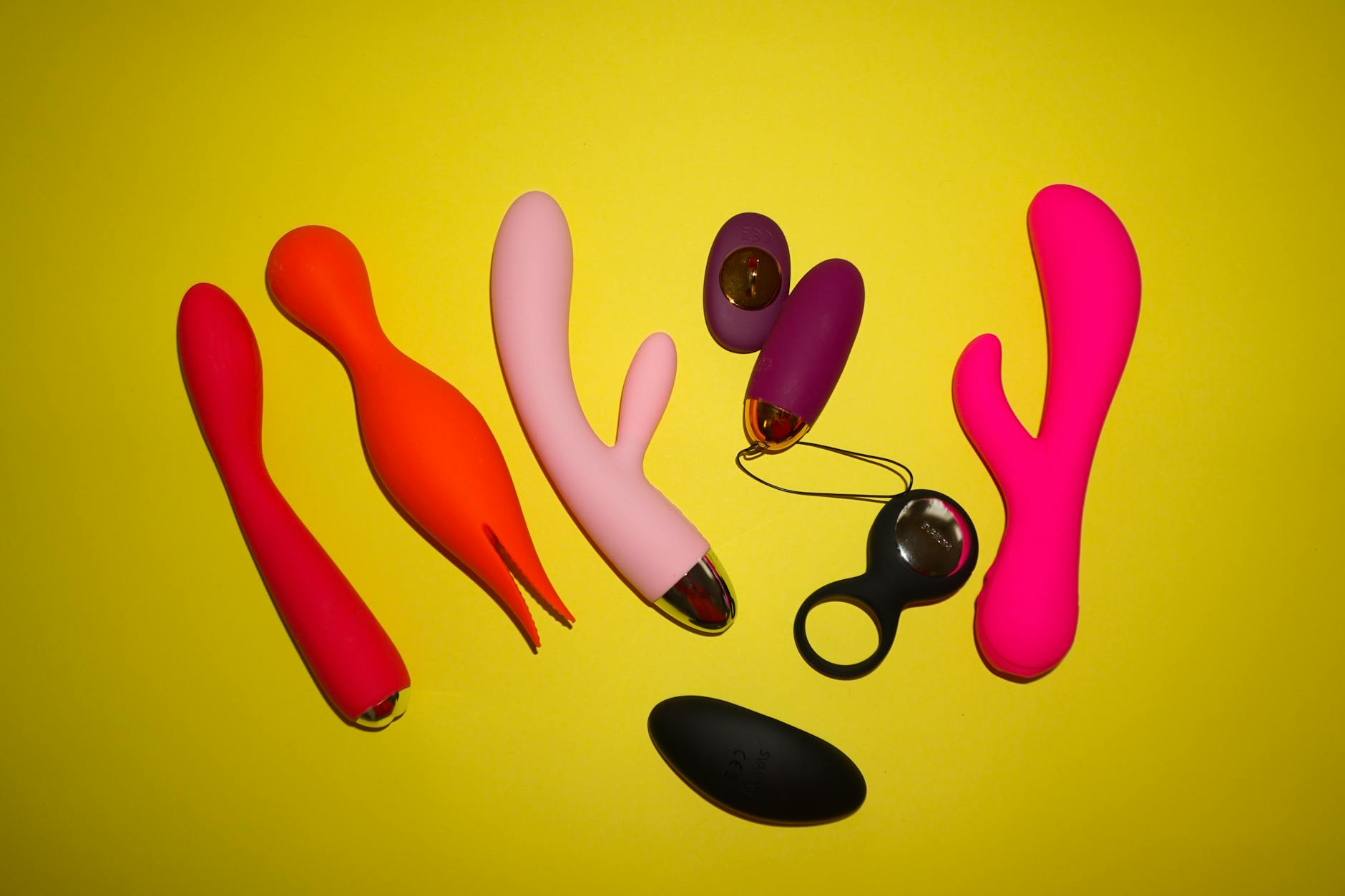
Lemon vibrators—specifically, clitoral suction toys like those designed by Hello Nancy—work particularly well for couples navigating this shift because they sidestep most of the friction points that emerge in midlife sex without requiring you to pretend everything's still the same.
Why midlife changes sexual response
Let's start with the physiology, fast.
Estrogen production drops. This affects tissue thickness everywhere but particularly in the vulva and vagina. The clitoral tissue becomes less plump, which means the same direct vibration can feel either different or even a bit too intense. Hormonal shifts also mean that arousal takes longer to build—not because desire went anywhere, but because the vasocongestion that used to happen in two minutes now takes five or ten.
For partners, this creates a mismatch. You might still have roughly similar desire, but your bodies are running on different timelines. This is where most couples get stuck. They interpret the timing difference as a lack of interest. It's not. It's just a timing difference.
Testosterone drops too, though not as dramatically as estrogen. This affects both desire and the sensation of orgasm—it often becomes more localized, less full-body. Some people report missing that full-system sensation. Others find that localized sensation is actually more intense because they can focus on it completely.
What lemon vibrators do differently
Most vibrators rely on direct vibration. That works well when tissue is thick and responsive. At midlife, that same intensity can overstimulate or feel uncomfortable. Lemon vibrators use suction technology, which is fundamentally different. Instead of vibrating against tissue, they create a gentle pulse that draws the clitoris slightly into the toy. It's more like mouth sensation than hand sensation, which is why so many people find it feels less aggressive but somehow more effective.
For couples, this matters because it means you don't have to coach a partner through "gentler" or "not there" feedback. The sensation is already calibrated differently. You can use it together without the negotiation that often kills the mood.
Also, suction-based toys warm up quickly. That matters more than you'd think when you're starting from a place where arousal is already taking longer. The warmth of the toy itself kickstarts the arousal process. Add a partner's touch, and the body catches up faster than it would with a cold traditional vibrator.
How couples use them differently at this stage
In your twenties and thirties, couples often use toys as a solo warm-up before partnered sex, or as an accelerant during. At midlife, the pattern shifts. You're more likely to use toys as part of the main event, not the opener. You might use a lemon vibrator for fifteen minutes while your partner touches you elsewhere, then transition to partnered sex. Or you might use it for the entire encounter, which is equally valid.
Honestly though, many couples in their fifties find that one partner using the toy while the other is present creates its own kind of intimacy. There's less performance pressure. You're not trying to sync arousal at the same speed. One person gets to focus entirely on their own pleasure while the other gets to witness it. After decades of sex that's often calibrated for efficiency or for someone else's timeline, this shift can feel radical.
The communication that used to be awkward—"Can we use something?"—becomes easier once you've actually tried it. It's not "Do you want help?" It's "Grab the lemon toy." It's practical. It's connected. It works.
The emotional permission piece
I've worked with hundreds of couples in their fifties, and this is what I notice: the women are often less interested in the toy as a sensation tool and more interested in it as a reset button. It says, "Your body still matters. Your pleasure is still the point." After decades of attending to a partner's pleasure, managing household rhythms, and often deprioritizing sex entirely, that message does something important.
For men, midlife often brings a different tension. Erectile function changes, recovery takes longer, and the cultural mythology of male sexuality becomes harder to live up to. Using a lemon vibrator with a partner shifts that completely. It moves sex from "Can I perform?" to "Can we feel good together?" That's not a small shift. That's a restructuring.
When you introduce a toy into a relationship at this stage, you're not really introducing a toy. You're introducing permission. Permission to evolve. Permission to need different things than you did at thirty. Permission to ask for what you want without it being a referendum on whether your partner is "enough."
That permission—that's what changes sex in your fifties from obligatory to optional to actually wanted again.
Practical setup that actually works
Here's what I recommend for couples starting this exploration:
First: pick a moment when you're not in crisis. Not "We haven't had sex in six months and we need to fix it now." Pick a moment of baseline relationship stability. Maybe it's a weekend morning. Maybe it's after a long conversation about intimacy where you're both on the same page.
Second: use lube. Water-based, always. This is not optional. Midlife tissue needs it, and the toy works better with it.
Third: start with curiosity, not performance. You're not trying to have the best sex ever. You're trying to figure out what feels good now, in these bodies, at this age.
Fourth: touching doesn't stop. One partner doesn't watch while the other performs. You keep touching. You keep talking. The toy is part of connection, not a replacement for it.
Fifth: recovery matters. You're not race-dating anymore. You can rest between rounds. You can separate arousal and orgasm. You can have sex for thirty minutes and have it be about closeness more than climax.
When to bring it into the bedroom
There's no universal timing, but here's what I notice: couples often wait until there's a problem. There's a mismatch in desire or sensitivity appears, and then they reach for a toy as a fix. That works, but starting earlier is easier. If you're in your late forties and sex is still going well, that's actually the perfect moment to explore. You're not problem-solving. You're exploring. That changes everything.
That said, if you're already at a point of tension around sex, now is still a good moment. Lemon vibrators are fundamentally different from what most people have tried. They often feel less clinical than traditional vibrators, which helps. But the real shift is admitting that things have changed and that you're both willing to adapt together. The toy is just the visible part of that adaptation.
The conversation that changes things
Before you buy anything, have this conversation with your partner: "My body is different than it was ten years ago. Your body is different too. I don't want to pretend it's not. I want to figure out what feels good now. Will you figure that out with me?"
Nothing fancy. Nothing vulnerable in a performative way. Just practical. Just true.
Then listen to what they say. Really listen. They might say yes immediately. They might need time. They might have their own concerns about aging and sexuality that they haven't said out loud yet. That conversation might take weeks. It should. Because you're not just deciding whether to buy a toy. You're deciding whether you're going to keep evolving together or calcify separately.
Once you've had that conversation, a lemon vibrator becomes what it actually is: a tool. Not a problem-solver. Not a band-aid. Just a different way of touching that happens to work better with the bodies you have now.
Reconnection is possible
I work with couples who haven't had sex in years. I work with couples who have weekly sex but feel distant during it. I work with couples in their fifties who tell me they feel invisible to their partners. Every single one of them feels like they're the only people in the world experiencing this.
They're not. Midlife sexuality is a collective experience that nobody talks about until they're in crisis. By then, couples are often stuck in shame or resentment. If you start earlier—if you name the change and adapt together—you sidestep all of that.
Lemon vibrators and other clitoral suction toys can't fix a broken relationship. But they can help a stable relationship evolve. They can help you remember what it felt like to be curious about each other's pleasure. They can help you realize that sex at fifty can be as satisfying as sex at thirty—just different. And different, it turns out, can be better.
FAQ: Couples, midlife sex, and clitoral vibrators
Why do lemon vibrators feel less intense than traditional vibrators?
Lemon vibrators use suction pulses instead of direct vibration. That creates a gentler sensation that's less likely to overstimulate. At midlife, when tissue becomes more sensitive and arousal takes longer, this gentler approach often feels more pleasurable. It's not that it's always less intense—it's that the intensity is distributed differently across the tissue, which many people find more satisfying.
Can using a clitoral vibrator together affect intimacy if one partner has never used toys before?
It depends entirely on how you introduce it. If you frame it as "You're not satisfying me, so I'm adding this," it creates distance. If you frame it as "I want to explore what feels good now, and I want you with me," it creates connection. The toy itself doesn't determine the outcome. The conversation before the toy does. That's true for any relationship dynamic, but it matters more at midlife when you're already navigating shifts in desire and sensation.
How long does it take to see a difference in pleasure after starting to use lemon vibrators together?
Most couples notice something in the first or second experience. Sometimes it's practical—the toy is comfortable, it feels good, arousal happens faster. Sometimes it's emotional—there's less awkwardness than expected, or the conversation required to get there opens something in the relationship. Change doesn't always come from the toy itself. It comes from the decision to evolve together.
Do lemon vibrators work if one partner has medication side effects that reduce sensitivity or arousal?
Partially. If the issue is purely physical—numbness from medication—a clitoral suction toy can help because it stimulates tissue differently than fingers or traditional vibrators. If the issue is psychological—medication affecting mood or desire—the toy won't fix that, but it might help your partner access pleasure they thought they'd lost. For both scenarios, talking to a doctor is worth doing first. Some medication interactions have solutions that don't require adding a toy.
Is it common for couples in their fifties to start exploring toys after years of not using them?
More common than you'd think. I'd estimate about 60% of couples I work with at midlife who weren't using toys before start exploring them in their fifties. Not because something went wrong, but because something shifted. Couples realize that the approaches that worked at thirty aren't working at fifty, and they're finally willing to try something different. Age brings permission sometimes. And that permission is powerful.
How do you know if a lemon vibrator is right for your relationship versus other options?
The honest answer: you don't until you try. But if you're a couple experiencing longer arousal times, tissue sensitivity changes, or just want something that feels less aggressive than traditional vibrators, lemon vibrators are worth trying. They're also usually quieter, which matters if you care about noise. Start with one. Use it solo first if that feels less intimidating. Then bring it into partnered sex. Let your body tell you if it's working.