Here's the thing nobody mentions at the clinic
You've been on hormonal birth control for years. It's reliable, it's convenient, and it works. What nobody explicitly tells you is that it also, quite often, turns down the volume on your entire sexual response system. Not completely. Not permanently. But noticeably enough that you might start wondering if you're losing your mind, or if your body simply stopped working the way it used to.
You're not broken. Your birth control is doing exactly what it's designed to do. It's just affecting more than people usually discuss in a five-minute clinic appointment.
Why hormonal birth control changes sensation
Hormonal contraceptives work by suppressing ovulation, which means they're also suppressing the cyclical hormonal patterns that drive arousal, blood flow, and genital sensitivity. Here's the part that matters:
Your clitoris and vulva are packed with estrogen and testosterone receptors. When you're on hormonal birth control, both of those hormones drop significantly. Lower testosterone means less spontaneous desire and slower arousal buildup. Lower estrogen means thinner genital tissue, less natural lubrication, and reduced blood flow to the clitoris during stimulation.
The brain piece is equally important. Many people report that hormonal birth control dampens mental arousal, not just physical response. The fantasy just doesn't land the same way. Desire feels muted, like you're watching yourself get turned on rather than actually experiencing it.
This is not depression. This is not relationship trouble. This is endocrine system adjustment.
What changes when you add sensation tools
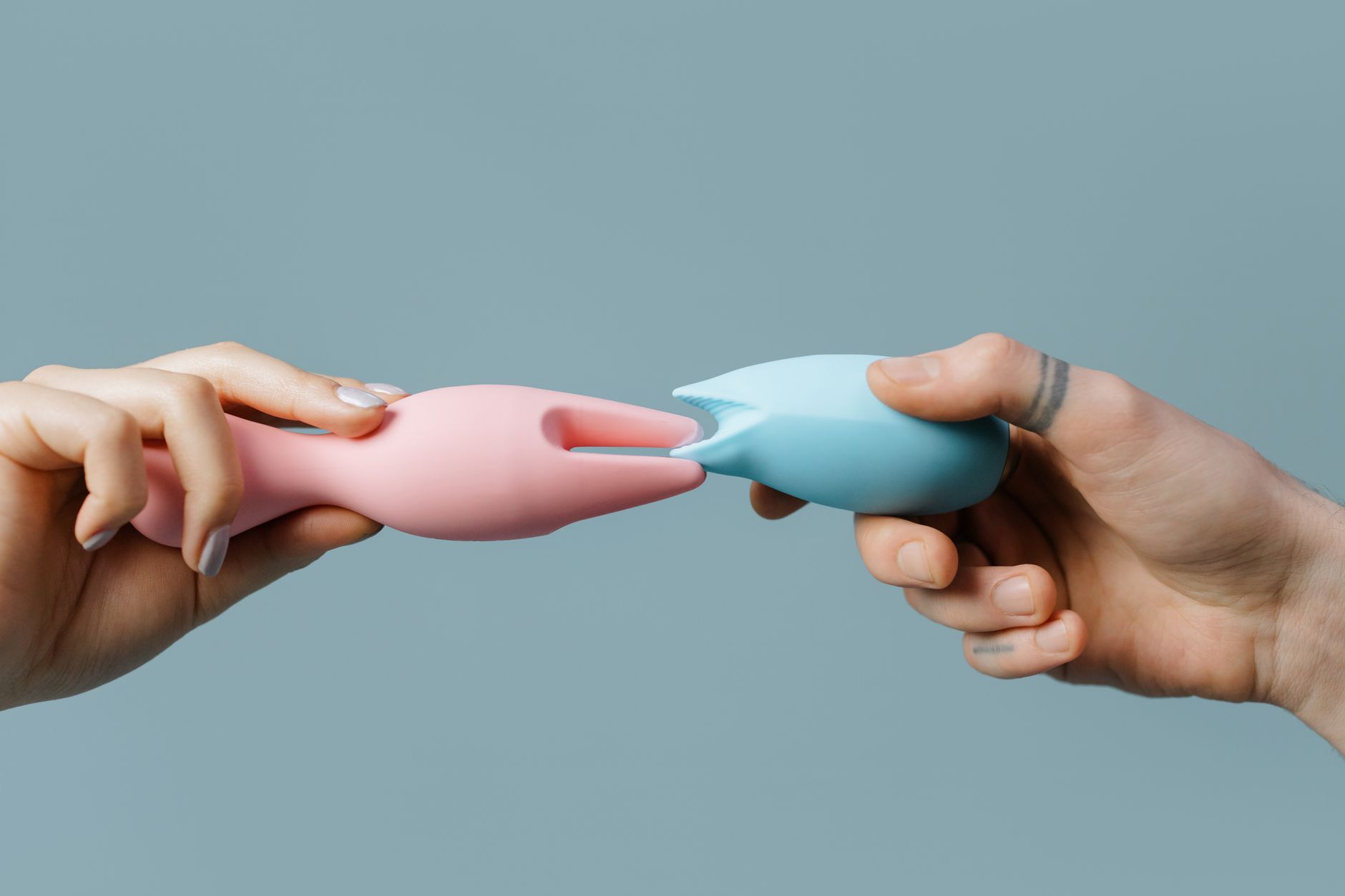
Lemon vibrators work differently on bodies using hormonal birth control because they bypass the typical arousal pathway. Instead of waiting for your body to build blood flow and sensation gradually, a lemon clitoral vibrator creates direct, immediate stimulation through air-suction technology. It doesn't require hormones to work. It requires a nerve and a change in pressure.
The data here is significant. People on hormonal contraceptives who struggled to orgasm solo often report that adding a lemon vibrator restores that capacity within the first few uses. Not because their hormones changed. But because external stimulation can access pleasure pathways that don't depend on endogenous arousal.
You're not trying to fix anything. You're adding a tool that works independently of the system that's currently muted.
Starting with lower intensities
When sensitivity is reduced, the instinct is often to turn things up. Stronger vibration, higher intensity, more pressure. That usually backfires. What typically works better is starting lower and building deliberately.
Here's why: reduced sensation from hormonal birth control doesn't mean nerves are dead. It means they're just less responsive to standard stimulation. That's actually good news, because it means sensitivity often returns quickly once you establish a pattern.
Start with pattern 1 or 2 on a lemon clitoral vibrator. Spend three to four minutes there. You're teaching your nervous system that stimulation is coming, without overwhelming it. Move to pattern 3 or 4. Notice what happens. Most people find that sensation builds gradually as blood flow increases and the clitoris becomes more engorged.
The session might take longer than it did before you started hormonal birth control. That's not a problem. That's information.
Layering arousal, not fighting it
If mental arousal is also dampened, no lemon vibrator is going to force an orgasm that your brain isn't interested in. What you can do is create conditions that make arousal easier to access.
Before using a lemon vibrator, spend 10-15 minutes on context. That might mean reading something that actually turns you on. It might mean time alone without your phone. It might mean touching your body in ways that aren't goal-oriented. Let your mind wander. Some people find that wearing something that makes them feel sensual helps. Others need to be in a specific room or time of day.
Then introduce the vibrator. You're not starting from zero arousal. You're adding a tool to an already-building response.
If you're with a partner, this becomes a conversation. Explain that sensation is different right now, not missing. That you want to explore together. That you might need different touch or timing. Many partners are relieved to have language for something they've noticed but didn't know how to raise.
Hormonal birth control type matters more than you'd think
Not all hormonal birth control affects sensation equally. This doesn't mean you should switch methods, but it's worth noting.
The pill comes in different hormonal doses. Extended-cycle pills (the ones you take continuously for 12 weeks) tend to create more consistent hormone suppression, which can mean more consistent sensation dampening. Standard 28-day pills create more fluctuation, which some people find helpful.
The patch and ring release hormones through different routes, which changes absorption. Some people find these gentler than the pill. Others find them identical in terms of sensation impact.
The implant and IUD (progestin-only methods) tend to have less systematic suppression overall, though experiences vary wildly. The point is not to change your birth control based on this. The point is to understand what you're working with.
If sensation is significantly impacting your quality of life, it's a legitimate conversation with your prescriber. There are options. Not everyone needs to explore them. But the choice should be informed.
What changes don't fix
I want to be direct about this: no vibrator is going to restore sensation if your birth control is the wrong fit for your body overall. Sometimes reduced sensation is part of a broader pattern. You feel flatlined on the pill. Your emotional arousal is gone. You don't fantasize anymore. Your body feels like it's not yours.
If that's happening, a lemon vibrator might help you reconnect temporarily. But the bigger question deserves attention. That might be a conversation with a healthcare provider about whether this particular method is right for you. It might mean trying a different formulation. It might mean exploring completely different contraception.
Your pleasure and your body's responsiveness matter. They're not luxuries. They're part of your baseline health. If hormonal birth control is creating a significant mismatch, that's worth investigating.
Staying consistent through the cycle
Even with hormonal birth control flattening the cycle, there's often still a rhythm. Some days feel more responsive than others. That's not your imagination. Breakthrough hormones, stress, cycle timing (yes, even if you're suppressing ovulation, some hormonal fluctuation still happens), all of this creates variation.
If you're exploring a lemon vibrator while on birth control, give yourself at least two weeks of regular use before deciding whether it's working. One attempt on a low-response day is not enough data. Multiple attempts across different days gives you a clearer picture of what's possible.
Most people find that sensation gradually improves over time, even while staying on the same birth control. That's because your nervous system adapts and learns that pleasure is available, even if it requires a different approach.
When to switch tools
If you've been using a lemon clitoral vibrator regularly and sensation isn't improving after a month, or if you feel nothing at all despite trying multiple patterns, that's information worth acting on.
Sometimes it means the vibrator itself isn't the right fit. Different lemon vibrators have different suction intensities and rhythms. Sometimes it's worth trying another model to see if the pattern or intensity works better for your body.
Other times it signals that the birth control itself is creating too much suppression for your individual neurobiology. That's when a conversation with your doctor becomes urgent, not optional. Reduced sensation from hormonal birth control is real and documented. It's also treatable if it's affecting your quality of life.
FAQ
Can lemon vibrators help if I've lost interest in sex entirely from my birth control?
Partially. Lemon vibrators can create physical sensation and sometimes trigger arousal through that pathway. But if mental desire has completely flatlined, a vibrator alone probably won't solve it. It might help you remember that your body can feel good, which is valuable. But the root issue usually requires a bigger conversation with your healthcare provider about whether this specific birth control is right for you. Check out strategies for rebuilding desire after hormonal shifts if this resonates.
How long does it take for sensation to improve after starting a lemon vibrator on birth control?
Most people notice something within the first week of regular use, though "something" might be subtle. Meaningful improvement usually takes two to four weeks. Some people find sensation gradually improves the longer they use the vibrator, because they're establishing new neural pathways for pleasure. Others find sensation stays about the same, which is also important data.
If I switch birth control methods, will sensation come back immediately?
Often yes, though not always overnight. If hormonal suppression was the main issue, many people notice improvement within days or weeks of switching to a method with lower hormone load or a different hormone formula. But individual variation is huge. Some people switch methods and feel no difference in sensation. Others notice immediate change. Blood work and patience usually help clarify what's happening.
Can I use a lemon vibrator with a partner if birth control has dulled my sensation?
Absolutely. In fact, this is often where lemon clitoral vibrators shine. If you're struggling to reach orgasm with a partner, adding a vibrator takes the pressure off both of you. You get direct stimulation that doesn't depend on your partner's timing or technique. Your partner gets clarity about what actually works for you. This is collaboration, not a workaround. Learn more about using lemon vibrators with partners when sensitivity is an issue.
Is reduced sensation from hormonal birth control permanent?
No. It persists while you're taking the hormones, and improves when you stop or switch methods. That said, some people find that even after stopping hormonal birth control, sensation doesn't fully return to baseline right away. Hormones take time to rebalance. Usually sensation comes back within weeks to a few months after stopping, but there's meaningful individual variation.
Should I stop taking my birth control if it's affecting sensation?
That's a personal choice that involves your own health priorities, contraceptive needs, and preferences. I'm not a doctor, so I can't advise you on stopping your method. What I can say is that reduced sensation is a legitimate side effect worth discussing with your healthcare provider. There are other hormonal options, lower-dose formulations, and non-hormonal methods that might feel different. The conversation is worth having.
You deserve sensation, even on birth control
Hormonal birth control is one of the most significant medical tools available for reproductive autonomy. It's also quietly affecting sensation and arousal for a lot of people, and that part of the conversation often gets minimized. It shouldn't.
Your pleasure matters. Your body's responsiveness matters. If hormonal birth control is creating a mismatch, lemon vibrators can help you reconnect in the meantime. They're also just useful tools for exploring what pleasure is possible for your specific body right now. That's not settling. That's adapting intelligently.
If you want to explore what might work best for your body, or if sensation isn't improving despite consistent use, reach out. We're here to help you figure this out.
References
- Wallwiener, M., Wallwiener, S., Seeger, H., et al. (2019). "Sexual function and contraception: sexual dysfunction and satisfaction in female hormonal contraceptive users." Journal of Sexual Medicine, 16(6), 827–835.
- Burrows, L.R., Basha, M., & Goldstein, A.T. (2012). "The effects of hormonal contraceptives on female sexuality." Journal of Sexual Medicine, 9(9), 2213–2223.
- Sanders, S.A., Graham, C.A., Bass, J.L., & Bancroft, J. (2001). "A prospective study of the effects of oral contraceptives on sexuality and well-being and their relationship to discontinuation." Contraception, 64(1), 51–58.