
Let's name what's actually happening
You want to touch yourself. You want to use a lemon clitoral vibrator. And then something happens. A voice. Maybe it sounds like a parent, a partner, a religion, or just the ambient culture you've lived in your whole life. And suddenly you feel guilty.
The guilt is real. It's not weakness or prudishness. It's a learned response with actual roots.
Where the guilt is actually coming from
Here's what I see in my practice: guilt about solo pleasure usually isn't about pleasure at all. It's about one of three things.
The first is old messaging about what's "supposed" to happen. Many of us grew up hearing, directly or indirectly, that your sexuality exists for someone else. Your body is for a partner, for reproduction, for giving pleasure, not for taking it alone. Solo pleasure gets framed as a consolation prize or a failure to find a partner. Even if you consciously reject that message, your nervous system still flinches.
The second is guilt about desire itself. If you were told that good people don't want things badly, especially sexual things, then the moment you feel strong desire, shame follows automatically. The wanting becomes the problem, not the acting on it. Using a lemon vibrator isn't the issue. The fact that you really want to use it feels dangerous.
The third is betrayal anxiety. If you have a partner, you might feel like solo pleasure is cheating, or that it means your relationship isn't enough, or that your partner will feel rejected if they find out. Sometimes the guilt is actually about honesty and fear of being discovered. That's a different problem than shame about the act itself.
Understanding which one is actually operating matters because the fix is different for each.
Why your body knows the difference between shame and caution
Guilt is useful sometimes. It's a signal that you've violated your own values. If you feel guilty about solo pleasure, the first honest question is: have you actually violated your values, or have you absorbed someone else's?
There's a real difference. Absorbed guilt feels like a constant hum of wrongness. It doesn't shift when you think about it logically. You know intellectually that solo pleasure is normal and healthy, and yet the feeling persists.
Actual guilt, by contrast, usually comes with a clear narrative. "I said I wouldn't do this and I did." Or "This conflicts with something I actually believe."
If you're experiencing absorbed guilt, a lemon vibrator won't fix it by itself. But using one intentionally, without secrecy, in a way that honours your own autonomy, starts to retrain your nervous system. Gradually, the wrongness signal fades.
The practical shift: from apology to intention
Let's say you live with a partner. You don't have to hide solo pleasure, and hiding it usually makes the guilt worse, not better, because now you're also managing secrecy and shame together.
A conversation works like this: "I want to explore what feels good to me on my own sometimes. This isn't about us. It's about knowing my own body better. I'd like your support with that." If your partner responds with insecurity or control, that's a separate relationship issue worth addressing with a couples therapist. But often, the response is "okay, that makes sense."
Naming it removes a huge layer of the guilt. Secrecy amplifies shame. Openness defuses it.
If you don't have a partner, or live alone, the permission is simpler. You're not betraying anyone. You're exploring your own body. That's it.
How lemon clitoral vibrators specifically help with this
Air-suction vibrators like the Lemon work differently than traditional vibrators, and that difference matters here. Because they don't require friction or thrusting motions, they're gentler. They feel less "performance-based" than a traditional vibrator. There's no script, no goal, no particular way you're supposed to use it.
You can use a Lemon at your own pace, experiment with intensities, stop whenever you want. That control is psychologically important when you're rebuilding trust in your own pleasure. It's not something being done to you. It's something you're doing for yourself. That distinction matters for rewiring guilt.
Start at a lower intensity pattern and spend time just exploring sensation without an orgasm as the end goal. This takes the pressure off and often feels less transgressive than goal-oriented masturbation. You're not "trying to come." You're just feeling.
What to do if the guilt doesn't fade immediately
Sometimes it lingers. Your rational brain knows solo pleasure is fine, but your emotional brain is still sending alarm signals. That's actually normal and doesn't mean you're doing anything wrong.
Three things help this process move faster.
First, repetition and normalcy. The more you engage in solo pleasure without anything bad happening, the more your nervous system learns it's safe. You're building a new pattern of evidence.
Second, separation from performance. Solo pleasure isn't about proving anything to anyone or reaching a specific outcome. It's exploration. The moment you catch yourself thinking about how you look, how long it's taking, or whether you "should" be more excited, gently redirect to sensation. What does the vibration actually feel like on your skin?
Third, if the guilt is tied to a specific person or belief system, sometimes talking it through with a therapist helps. Not because something is wrong with you, but because sometimes inherited guilt needs to be consciously examined and released. A therapist who specializes in sexuality, religion, trauma, or relationships can help you untangle where the guilt came from and whether it actually belongs to you.
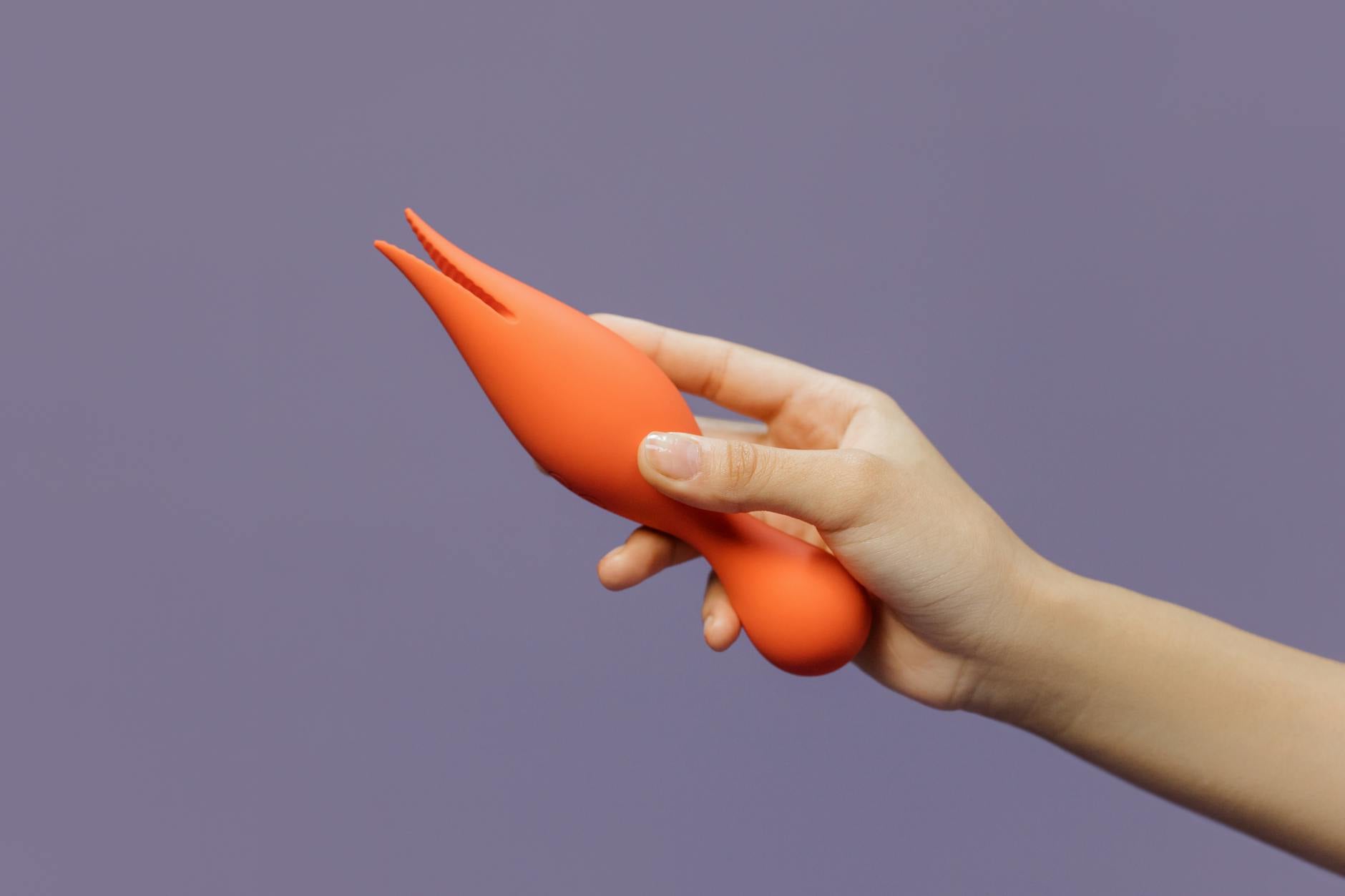
Photo by cottonbro studio on Pexels
The relationship angle: what actually matters
If you have a partner and you're worried solo pleasure threatens your relationship, here's what research actually shows. Partners who know themselves well, including sexually, tend to be better partners. They know what they like, they communicate clearer, and they're less likely to resent their partners for not reading their mind.
Solo pleasure isn't competition. It's information gathering. The better you know your own body, the better sex you can have together. You're not choosing yourself over your relationship. You're investing in both.
Sometimes insecurity does show up in a partner, and that's worth taking seriously. But not by giving up your autonomy. By addressing the insecurity directly. "I want to feel secure exploring my own pleasure and I also want you to feel secure in us." Then figure out together what that looks like.
When guilt is actually a sign something else is wrong
There's one scenario where guilt about solo pleasure might be pointing to a real relationship problem. If you feel guilty because your partner has explicitly told you not to, or because you've made an agreement you're breaking, that's different. That's a betrayal, and the guilt is actually useful.
In that case, the issue isn't solo pleasure. It's honesty and consent. You either need to renegotiate the agreement together, or you need to be honest about what you want and accept the consequences.
Most of the time though, when people feel guilty about solo pleasure, no actual agreement has been broken. The guilt is inherited, not earned.
The integration: your body, your rules
Using a lemon clitoral vibrator for solo pleasure is an act of self-knowledge and self-respect. Over time, that's what it starts to feel like, instead of what it felt like at first, which might have been transgression or shame.
You're allowed to want things. You're allowed to explore what feels good. You're allowed to take pleasure from your own body without permission. None of that is selfish. It's actually foundational to being a whole person in a relationship.
Start small if you need to. Use your vibrator with intention. Notice what shifts in how you feel about yourself and your body. The guilt usually fades faster than you'd expect once you stop fighting it and start naming it.
Your pleasure matters. Full stop.
People also ask
Is it normal to feel guilty about using lemon vibrators or other adult toys?
Absolutely. Guilt about solo pleasure is one of the most common things I encounter in practice, and it doesn't mean something is wrong with you. It usually reflects inherited beliefs about sexuality, gender roles, or what your body is "for." The fact that you're feeling guilt and using a lemon vibrator anyway shows self-awareness and courage. Over time, as you engage in solo pleasure without negative consequences, the guilt typically fades.
Should I tell my partner I'm using lemon vibrators for solo pleasure?
It depends on your relationship values around openness and honesty. If you typically share important things with your partner, keeping this secret can actually build more shame and distance. A simple, straightforward conversation ("I want to explore what feels good for me on my own sometimes") usually goes better than you might expect. If your partner responds with insecurity, that's worth exploring together, potentially with a couples therapist. But the answer usually isn't to hide your body from the person you're intimate with.
Can solo pleasure with a lemon clitoral vibrator strengthen my relationship?
Yes, often. When you understand your own body better, you communicate more clearly with partners, you know what you need, and you're less likely to resent them for not intuitively knowing. Solo pleasure isn't competition. It's information. The more you know about yourself sexually, the more you can bring to a shared intimate life. Plus, people who feel entitled to their own pleasure tend to be more secure and happier overall.
What if using a vibrator makes me feel more guilty instead of better?
Pay attention to what's actually triggering the guilt. Is it the act itself, or is it fear of discovery, or concern about a partner's reaction, or something someone taught you long ago? Once you identify the specific source, you can address it directly. Sometimes you need to have a conversation. Sometimes you need to challenge an old belief. Sometimes you need professional support from a therapist. Guilt that intensifies might also be signalling that an underlying relationship issue needs attention.
How do I know if my guilt is about sex or about something in my relationship?
Ask yourself: if I lived alone, would I feel guilty? If the answer is no, the guilt is probably about your relationship or someone's potential reaction. If the answer is yes, the guilt is likely internalized shame about sexuality itself. Both are addressable, but the approach is different. Relationship guilt usually needs a conversation. Internalized shame usually needs a mindset shift and repeated evidence that pleasure is actually safe.
Can I use lemon vibrators secretly without guilt?
Not really, in my experience. Secrecy and shame feed each other. The more you hide something, the more your nervous system registers it as dangerous or wrong. Openness doesn't mean announcing it to everyone, but it might mean being honest with yourself, or with a partner if you share a life. Removing the secrecy usually removes a layer of guilt automatically.
References and resources
If you're interested in exploring these ideas further, how to use lemon vibrators when you want to explore with a new partner addresses communication and consent. For those navigating relationship changes more broadly, pleasure feels different after relationship changes offers perspective on how transitions affect intimacy. And if anxiety is part of the picture, how to use lemon vibrators when anxiety makes it hard to relax during sex provides grounding strategies.
For questions about Lemon Suction products or further support, reach out at /contact.