
Let's talk about the conversation nobody wants to have
Most couples don't bring up vibrators because the conversation feels loaded. Like you're saying something's missing. Or you're asking for permission to want something they can't give you. Or you're implying their touch isn't enough.
None of that is actually what's happening. But the silence around it makes it feel that way.
Here's what I see in my practice: couples who introduce lemon vibrators together don't fix a broken thing. They unlock a thing that was already working but stuck in a narrow groove. It's the difference between a relationship that functions and one that expands.
What actually changes when you use a lemon vibrator as a couple
Let's separate the mythology from the reality. A lemon clitoral vibrator doesn't make pleasure happen. Your partner's touch doesn't make pleasure happen. Your own nervous system makes pleasure happen. What a tool like the Lem does is create a different kind of stimulation that your partner's hand alone can't replicate.
Here's the clinical part: suction-based clitoral vibrators (like lemon sucker technology) stimulate a larger surface area of nerve endings compared to direct vibration. This means different intensity, different texture, different sensation. For many people, this is a completely different experience from what they've had before.
When you introduce this together, two things happen at once. First, you both get to witness something new. Second, you get to participate in creating it. That shift from observer to collaborator changes the whole dynamic.
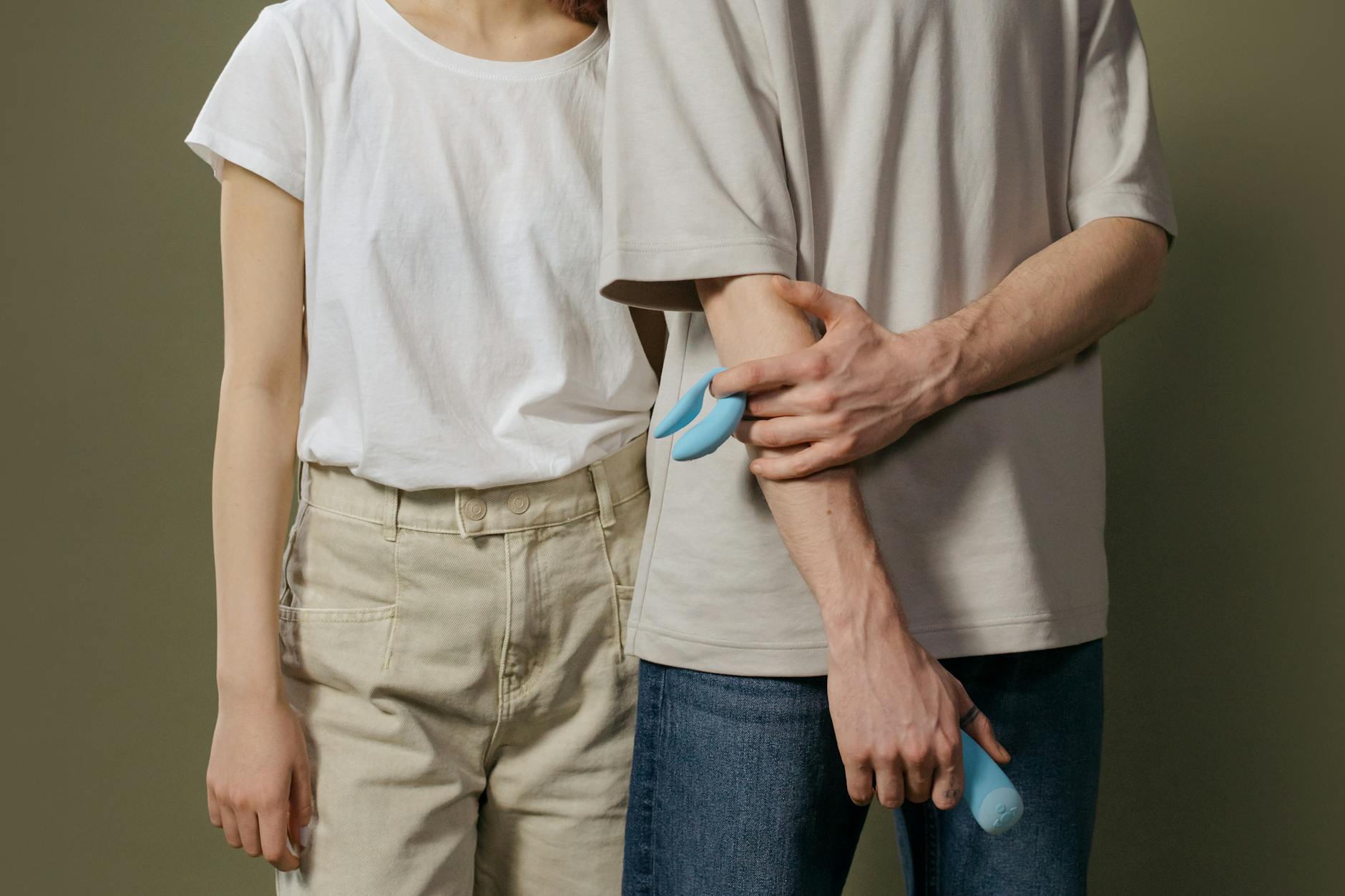
Photo by SHVETS production on Pexels
The permission piece (the part that actually matters)
Most people I work with don't realize they've been waiting for permission. Permission to want something specific. Permission to ask. Permission to take up space with their own pleasure.
When you introduce a lemon vibrator as a couple, something shifts. It becomes an external object to focus on instead of internal judgment. Your partner isn't thinking "I'm not enough." They're thinking "Let's figure this out together." And you're not thinking "I have to ask for something weird." You're thinking "We're exploring this together."
That reframe is worth everything. It's the difference between shame and curiosity.
If you've been in a long relationship, there's also a practical permission happening. You're saying "I want to be present in this moment with you, not checked out or performing." A lemon vibrator can actually help that presence because it removes some of the pressure to be the sole source of stimulation. It lets you both relax into the moment.
How to actually introduce one without the awkwardness
Three approaches, depending on where you are:
The direct approach. "I've been curious about trying a clitoral vibrator together. I think it might feel good and I'd like to explore it with you." That's it. No apology, no preamble. If your partner needs reassurance, give it: "This isn't about anything missing. It's about something I want to experience with you."
The research approach. Send them a link to an educational article (like the one on how lemon vibrators work during different arousal phases). Frame it as curiosity, not a request. A lot of people respond better to information first, decision later.
The gift approach. If you've got a strong sense of your dynamic, buying one together can feel less like a negotiation and more like a shared purchase. Some couples treat it like any other wellness tool. Others make a small ritual out of it. Both work.
Honestly though? The approach matters less than the tone. If you're matter-of-fact and curious, they will be too. If you're apologetic or tentative, they'll wonder if there's something to apologize for.
What to do the first time you use one together
Start slow. Not in a "we're being cautious" way, but in a "we're savoring this" way. There's a difference.
Set aside time when you're not rushed or tired. This isn't about performance or outcomes. It's about exploration. That mindset shift makes everything easier.
Begin with a clitoral vibrator on the lowest setting. Let your partner control it first, or hold it together. This gives you both a chance to learn how it feels before intensity gets in the way. Many people find that the gentlest suction feels the most intense because it's such a different sensation.
Talk about what you're noticing. "Does that feel good?" "Want more intensity?" "Should we try a different pattern?" This isn't clinical. It's hot. Turns out that communication and attention are some of the most erotic things in a long-term relationship.
If your partner wants to step back or slow down, that's fine. Some people need time to get comfortable. Some people discover they prefer other sensations. None of that means the exploration failed. It just means you learned something.
The research on couples and vibrators
Here's what studies show: couples who use vibrators together report higher satisfaction with their sex lives overall. Not because the vibrator is magic, but because they're communicating about pleasure. They're paying attention. They're curious about each other.
The research also shows that introducing a tool doesn't replace partner intimacy. It doesn't create dependency. It actually correlates with more frequent partnered sex, not less. When you remove the pressure to be the sole source of everything, people actually engage more, not less.
What's interesting in my clinical work is that couples often report the conversation about the vibrator changes things even before they use it. The fact that they could say what they wanted, and their partner responded with openness, rebuilds something. Trust. Curiosity. The sense that they're on the same team.
When to get professional help
If you bring this up and your partner shuts it down completely, that's information. Not information that the relationship is broken, but information that something needs attention. Maybe they feel inadequate. Maybe they have shame around sexuality. Maybe they're scared of change.
That's worth talking through, ideally with a therapist who specializes in couples work. A good therapist won't tell you what to do. They'll help you understand what's underneath the reaction so you can move forward together.
If your partner wants to explore this but you're hesitant, same thing applies. Don't push yourself into something you're not ready for. But also don't assume hesitation means no. Sometimes curiosity needs space to grow.
Why lemon vibrators specifically work well for couples
A lemon clitoral vibrator is smaller and quieter than a lot of options. It's easier to incorporate into partnered play without it feeling clinical or overwhelming. The suction sensation is genuinely different, which means it's genuinely worth exploring together. And visually, they're just a friendlier object. That matters more than you'd think.
The fact that Hello Nancy makes lemon vibrators specifically designed for this kind of exploration means you're not shopping for something made for solo use and trying to shoehorn it into a partnered context. The design itself says "we thought about how this works for two people."
The closing part
Introducing a lemon vibrator as a couple isn't about fixing something broken. It's about saying yes to curiosity. Yes to wanting something specific. Yes to exploring pleasure together instead of pretending you already know everything about each other.
That's actually what a strong long-term relationship is built on. Not complacency. Not assumption. But the willingness to keep discovering each other.
If you want to explore this further, whether you're nervous about the conversation or curious about the actual mechanics, we've got resources. Start with how lemon vibrators work in long distance relationships to understand the dynamics, or check out our guide on how to use lemon vibrators with a partner for the practical details.
Your pleasure matters. Your partner's pleasure matters. And the conversation to make both happen? That matters most of all.
People also ask
Will introducing a vibrator into our sex life make my partner feel inadequate?
Not if you frame it right. The shift happens in language. "I want to try this together" is completely different from "I need this because you're not enough." Most partners actually feel relief when you name a specific desire because it removes the pressure to guess. What often feels inadequate is the silence and assumption. The conversation fixes that.
How do I know if my partner will be open to using a lemon vibrator together?
You won't know until you ask. But you can pay attention to how they respond to other conversations about pleasure. Do they shut down? Get curious? Laugh nervously? Those patterns tell you something about approach more than outcome. Someone who usually needs information before deciding might respond well to sending an article first. Someone who's more spontaneous might prefer a direct conversation. You know your partner. Let that guide the timing and framing.
Is it normal to feel nervous about suggesting this to a partner?
Completely normal. You're about to be vulnerable about wanting something specific. That takes courage. The nervousness doesn't mean you shouldn't do it. It means you're risking something that matters. That's actually when communication is most important.
What if my partner says no?
That's their boundary and you respect it. What matters then is understanding why. Is it shame? Fear? Just not interested? Those are different conversations. Some people come around after time and conversation. Some don't. Either way, you've learned something about what matters to each of you. That's useful information for the relationship.
Can we use a lemon clitoral vibrator if we've been together a long time and haven't used vibrators before?
Absolutely. There's no expiration date on trying new things together. Some couples wait decades. Some try things early on. What matters is that you both want to. Long-term relationships are sometimes the best time because you already have trust and communication patterns. You're just expanding them.
How do we talk about what we both want to happen when we use it together?
Be specific but not scripted. "What do you imagine when you think about this?" "What are you curious about?" "What turns you on about the idea of trying this?" Listen without judgment. Some people are excited about the sensation itself. Some about the permission it represents. Some about the novelty. None of those is wrong. Your job is to understand what your partner's hoping for so you can show up that way.